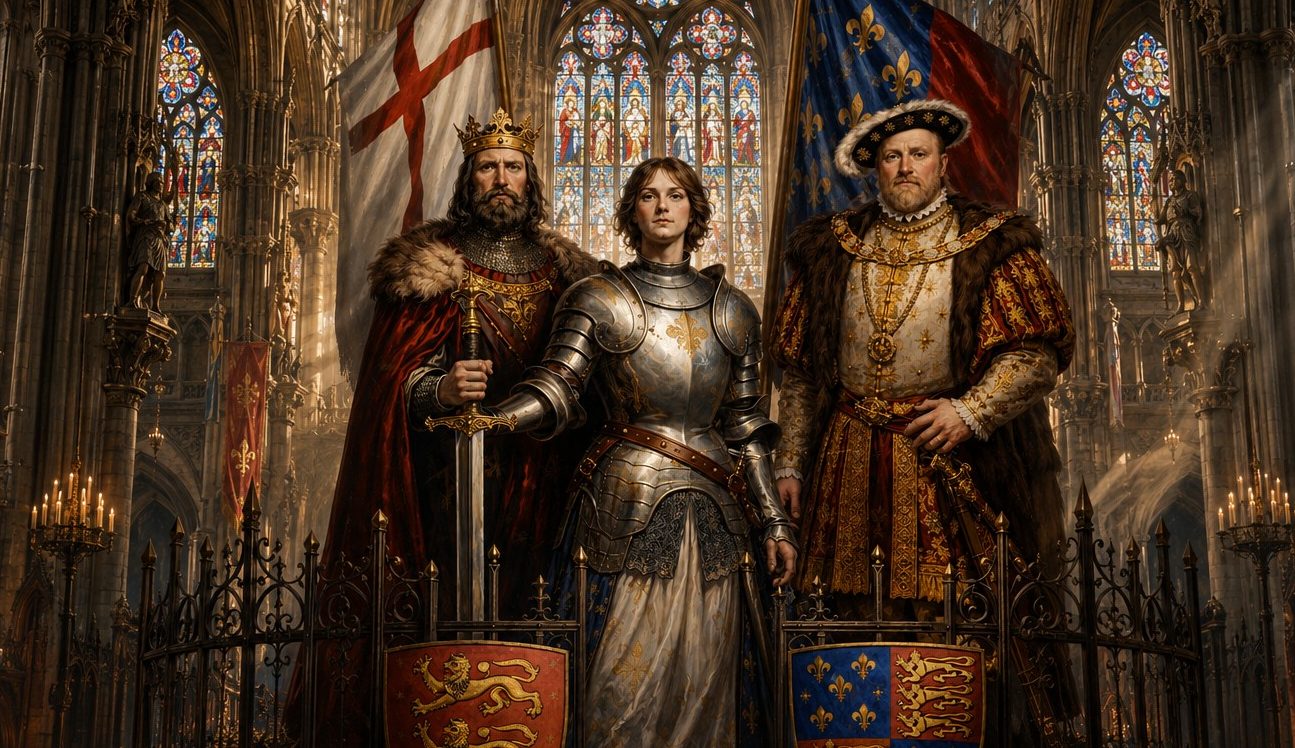

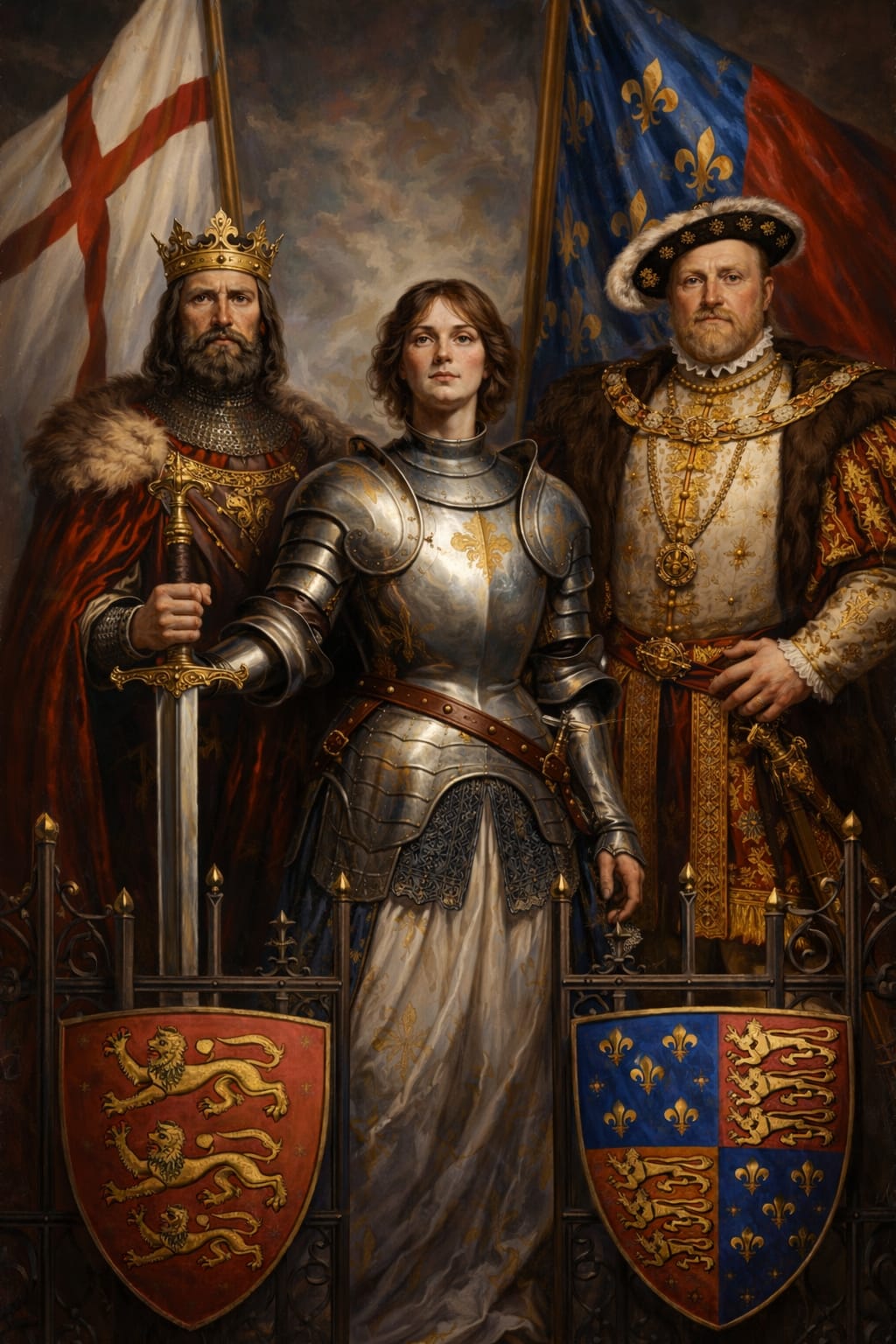
From the moment William the Conqueror set foot on English soil in 1066, the destinies of England and France became inseparably entwined—two crowns locked in rivalry, kinship, imitation, and defiance. What followed was not merely a series of wars, but a centuries-long dialogue of power, culture, and identity. The Norman elite reshaped England in the image of continental Europe; its language, governance, and aristocratic structures bore unmistakable French influence. Yet beneath this imposed order, an English identity simmered—one that would define itself as much in opposition to France as through its inheritance from it.
Across the medieval centuries, the balance of power repeatedly tilted toward France. From the Angevin Empire’s fragmentation to the humiliations of the Hundred Years’ War, England’s ambitions on the continent were steadily eroded. The emergence of figures such as Joan of Arc did more than turn the tide of battle—they reshaped the psychological and political landscape of Europe. France consolidated; England retreated inward.
It is within this long arc of defeat, influence, and rivalry that we must reconsider the seismic rupture of the 16th century. When Henry VIII broke from Rome and dismantled the Catholic Church’s authority in England, it is often framed as a personal or dynastic act. Yet such a view may be too narrow. This symposium proposes a more provocative thesis: that the English Reformation was not merely born of royal will, but was the culmination of centuries of Anglo-French entanglement—of cultural assimilation resisted, of military humiliation remembered, and of a kingdom seeking to redefine itself beyond the shadow of continental dominance.
In this light, the break with Rome becomes more than a religious schism; it marks a decisive step in England’s gradual disentanglement from the European order that had shaped it since 1066. From that rupture flowed new relationships between crown, church, and state—conditions that, over time, would foster the intellectual, economic, and institutional freedoms underpinning the rise of modern Britain and, ultimately, the Industrial Revolution.
This is not a simple story of cause and effect, but a continuous thread—stretching from Norman conquest to industrial transformation—inviting us to reconsider how conflict, identity, and historical memory shape the destiny of nations.