
The Angel Who Refused to Die
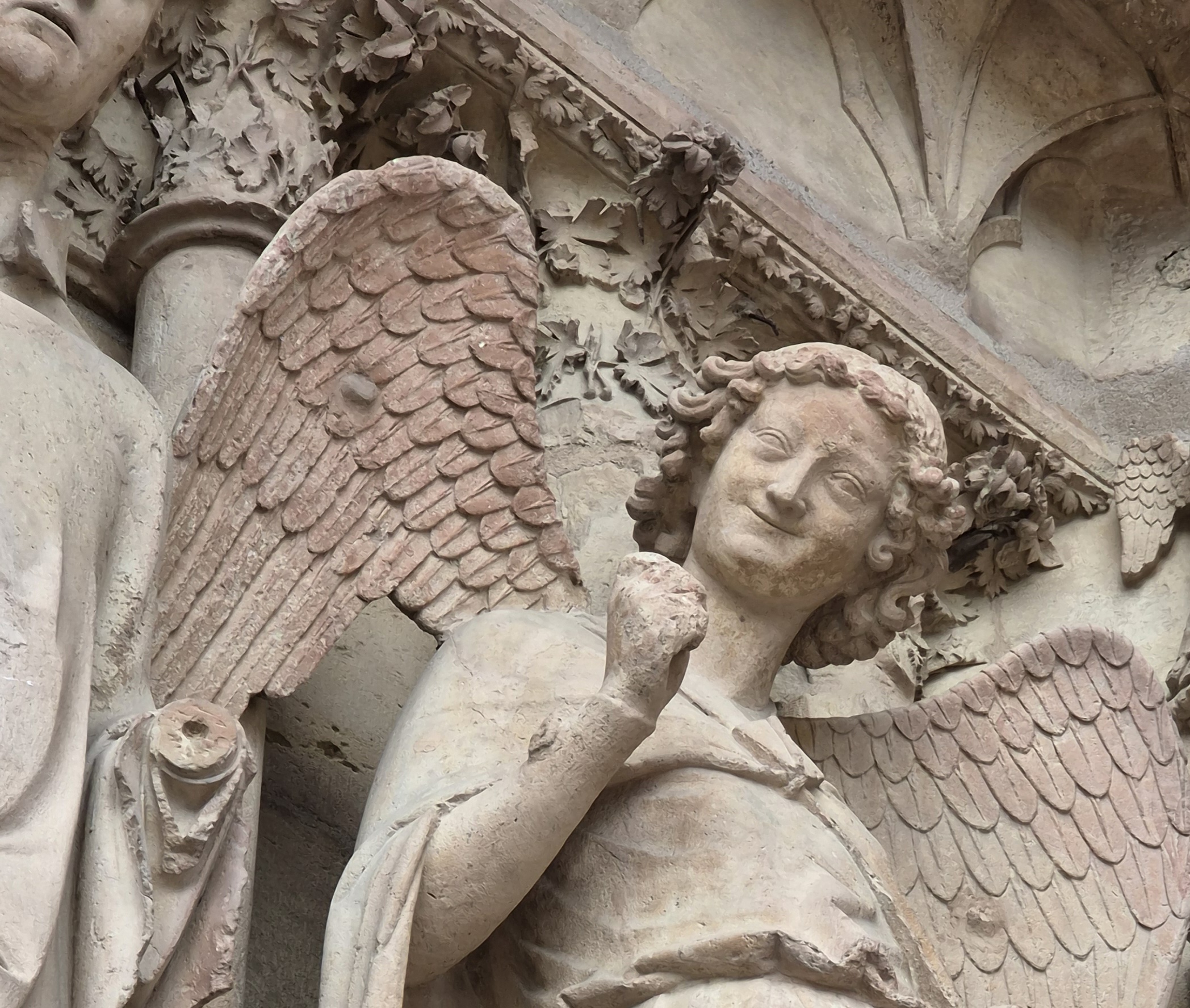
Among the thousands of statues that adorn Reims Cathedral, none is more famous than the Ange au Sourire – the Smiling Angel.
At first glance it appears to be merely another Gothic sculpture among many. Yet this single figure became one of the most powerful symbols of France, surviving war, destruction, and near annihilation before returning to smile once again over the city of Reims. Its story is as dramatic as the cathedral itself.
A New Type of Angel
The Smiling Angel was carved around 1240–1255 during the great building campaign of Reims Cathedral.
The sculpture stands on the western façade near the north portal and forms part of a larger sculptural programme depicting biblical scenes and saints.
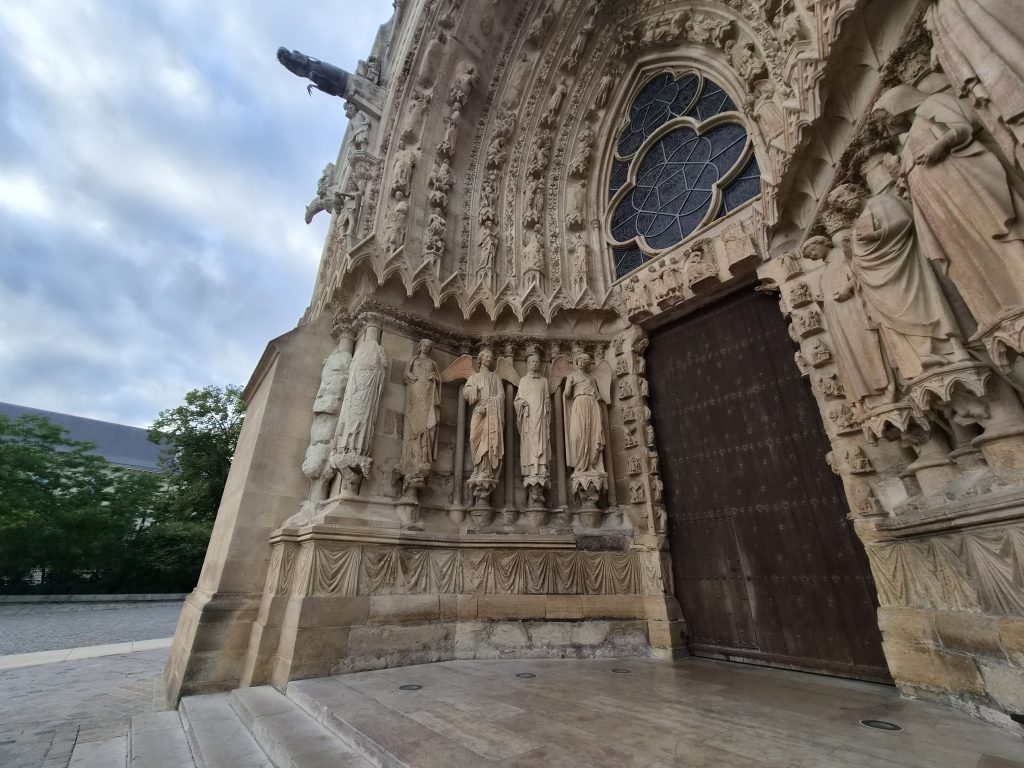
What made the figure remarkable was not merely its craftsmanship but its expression.Earlier Romanesque sculpture often depicted rigid, solemn figures.
The sculptors of Reims were creating something entirely different. Their saints and angels moved naturally, their drapery flowed realistically, and their faces showed genuine emotion.
The Smiling Angel appears almost alive.
Its head turns slightly, its robes fall in natural folds, and its smile is warm, welcoming and strangely human.
Medieval visitors arriving at the cathedral would have encountered not a terrifying messenger of judgement but a joyful messenger of heaven.
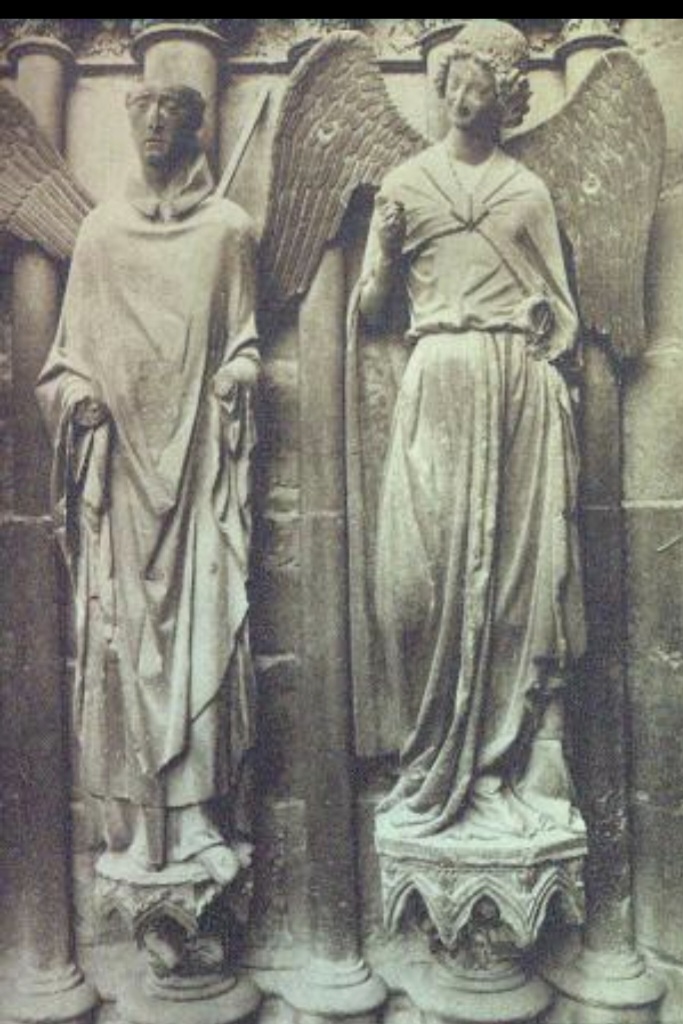
Many scholars interpret the smile as representing the eternal joy of paradise – the promise of salvation offered by the Church.
The statue is often associated with the Annunciation, the moment when the Archangel Gabriel announced to Mary that she would bear Christ. Others simply see it as a heavenly guardian welcoming worshippers into the house of God.
Reims – The Cathedral of Kings
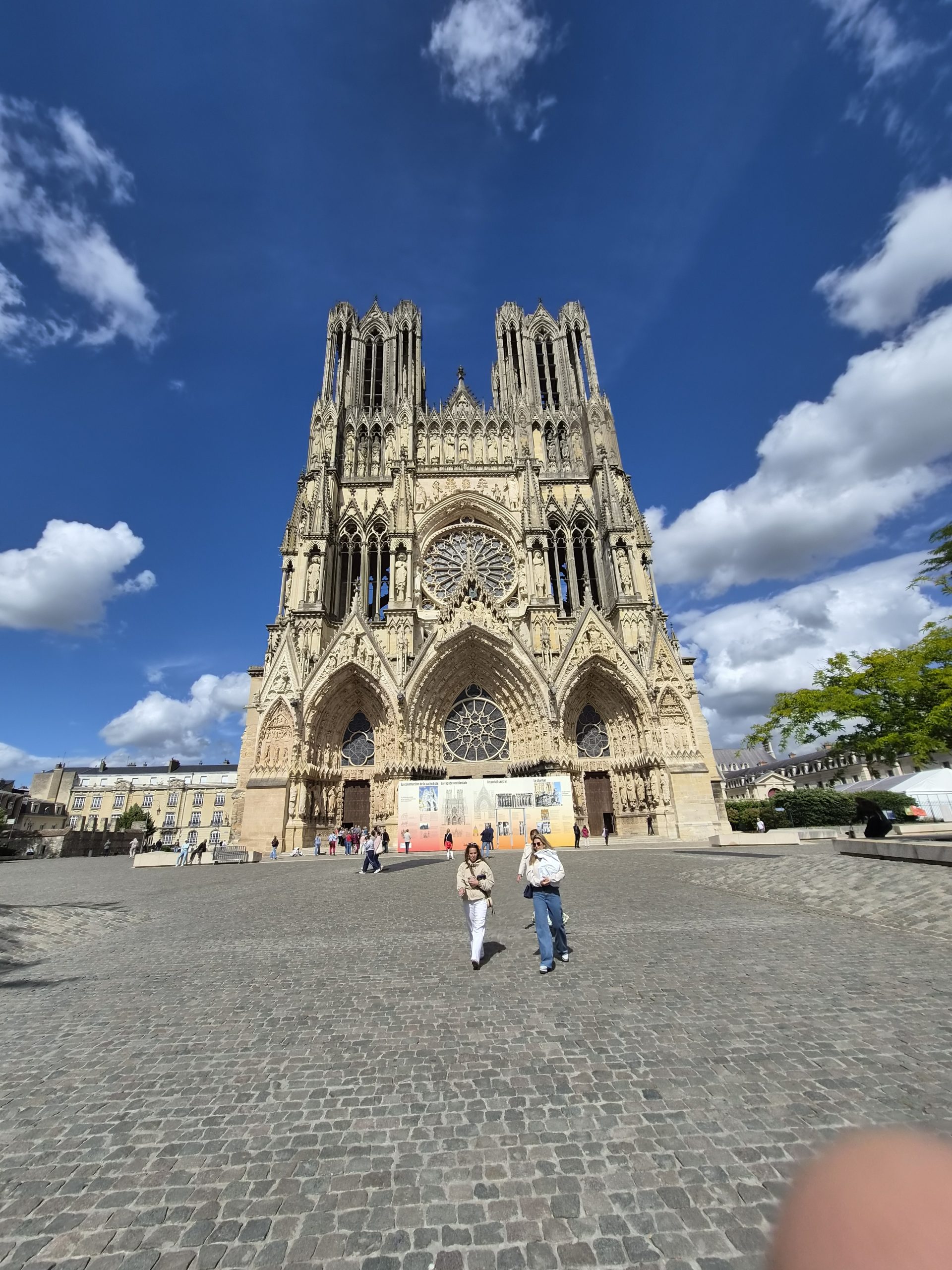
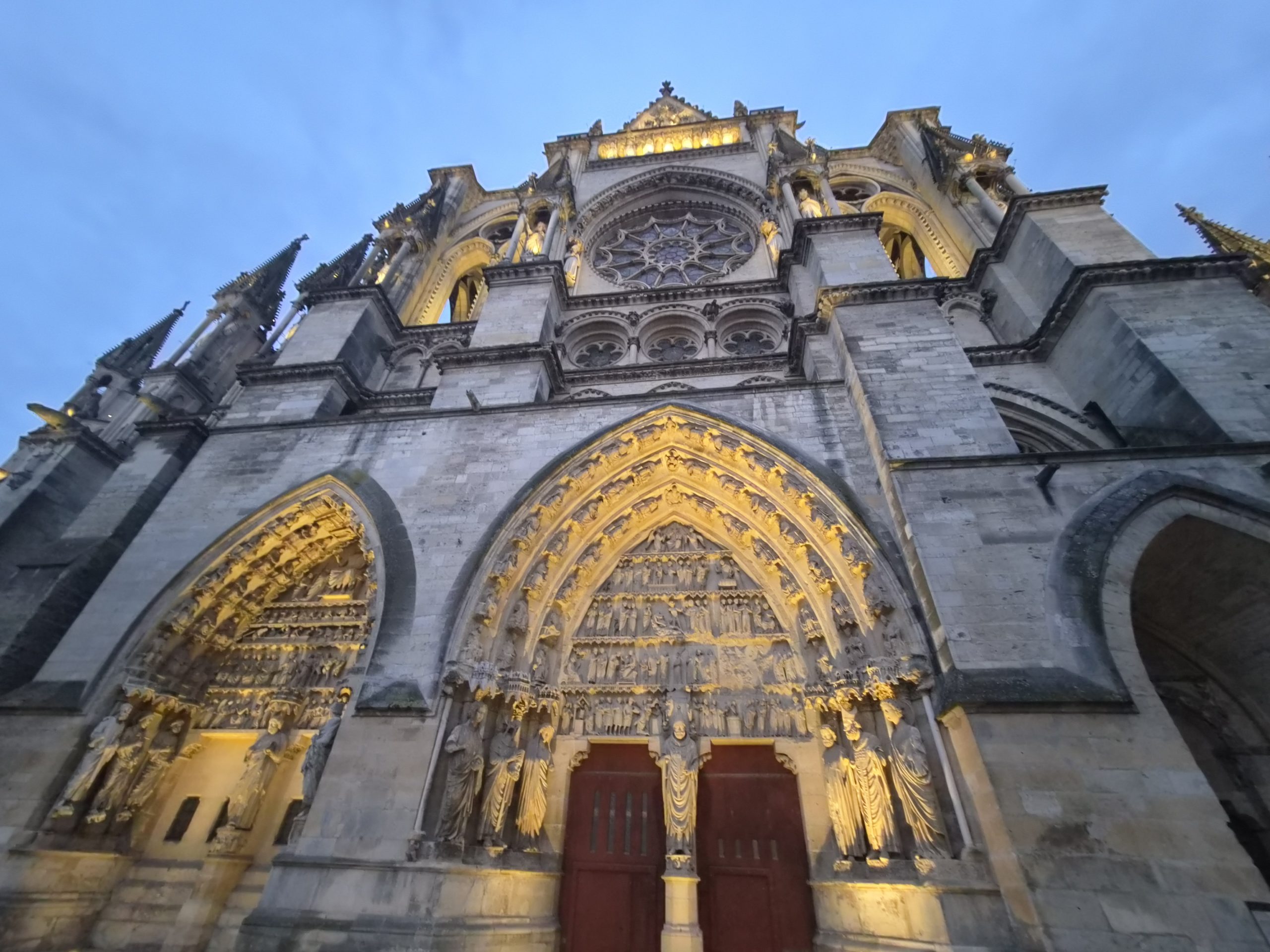
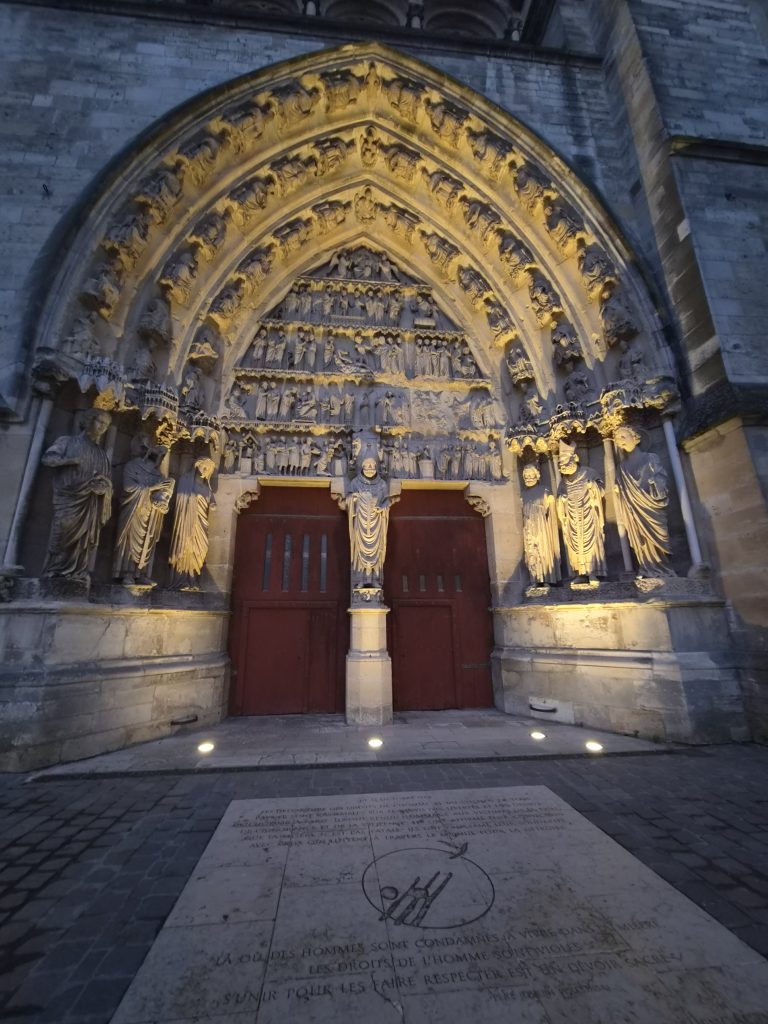
To understand why the Smiling Angel became so important, it is necessary to understand Reims itself.
For centuries Reims was the coronation church of France. Almost every French king, from the Middle Ages until the Revolution, was crowned here beneath its soaring Gothic vaults.
The cathedral was therefore not merely a church.It was a symbol of France itself.
Its façade contained more than 2,000 sculptures, creating a vast stone Bible for pilgrims, nobles and common people alike. The Smiling Angel was only one figure among thousands, yet it possessed a character that made it memorable long after visitors had forgotten the others.
The Fire of 1914
Then came disaster.
In September 1914, only weeks after the outbreak of the First World War, German artillery shells struck Reims Cathedral.The bombardment ignited wooden scaffolding around the cathedral.
Flames spread rapidly across the roof.
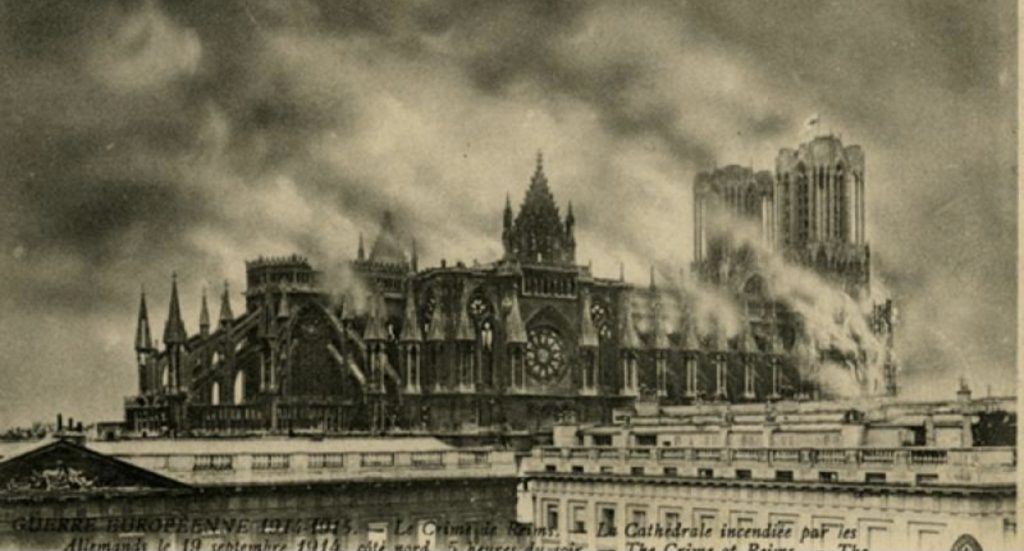
Molten lead poured through the gargoyles while centuries of craftsmanship disappeared in smoke and fire. The cathedral became known throughout France as the “Martyred Cathedral.”
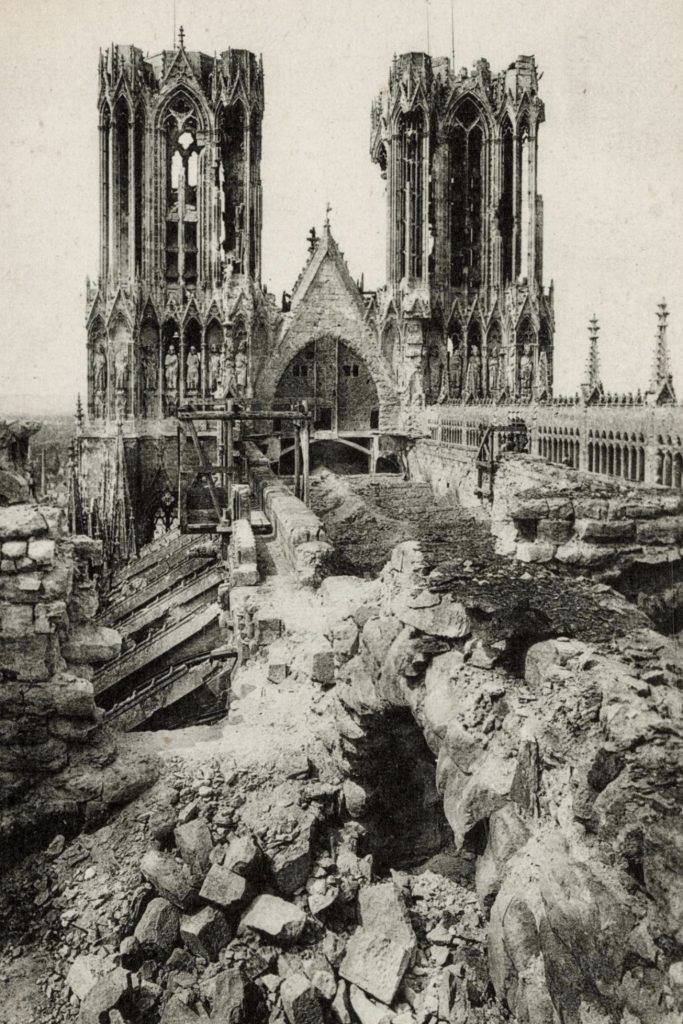
During the blaze the Smiling Angel suffered a catastrophic blow.
A burning beam crashed onto the statue, severing its head.
The head smashed into numerous fragments on the ground below. For many observers it seemed that one of France’s most beloved medieval treasures had been lost forever.
The Angel Becomes a National Symbol
Something extraordinary happened next.
Photographs of the decapitated angel spread across France and around the world.
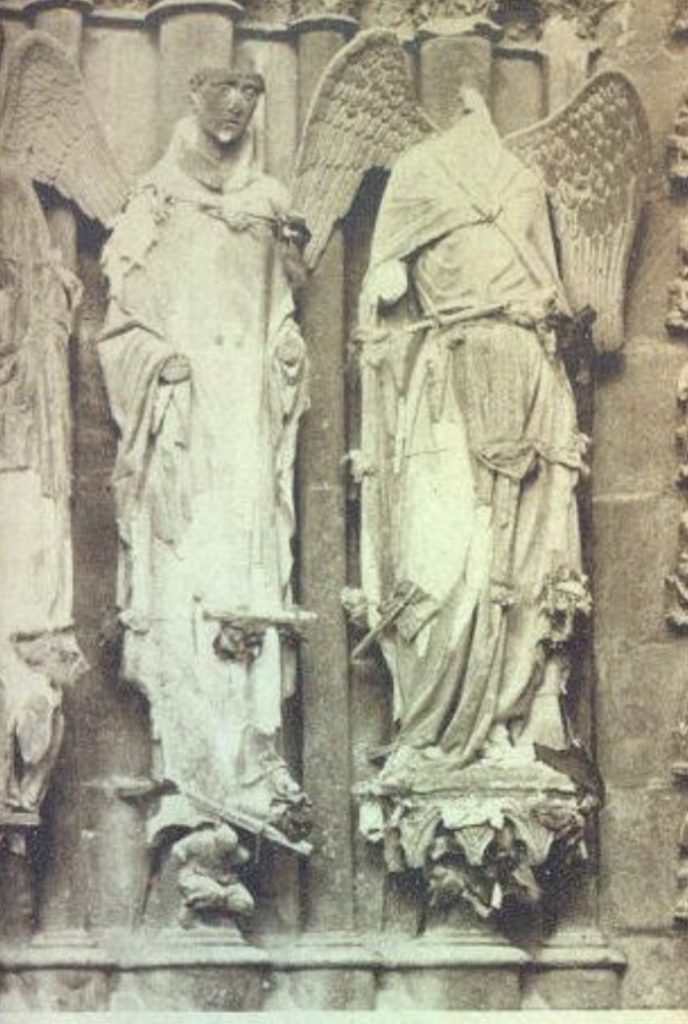
The broken statue became a symbol of the destruction of French culture during the war. Newspapers published images of the fallen head. Posters used the damaged angel as evidence of the destruction inflicted upon French heritage.
The smiling face that had once welcomed pilgrims now became a symbol of suffering and resistance.
The statue was no longer merely a medieval sculpture.
It became a national icon.
French propaganda referred to the destruction as “The Crime of Reims.”
The fallen angel came to represent not only a damaged cathedral but the wounded soul of France itself.
Saving the Head
Fortunately, all was not lost.
After the bombardment, clergy and local citizens carefully recovered the shattered fragments of the angel’s head. Accounts describe how the pieces were collected and preserved despite the continuing danger of war.
Later, restorers discovered that casts and photographs of the sculpture existed from before the war.
These records would prove invaluable.
Using surviving fragments, photographs and plaster casts, restoration specialists painstakingly reconstructed the angel’s face.
The process took years.
France Smiles Again
When restoration work began after the war, the Smiling Angel became a symbol of national recovery.
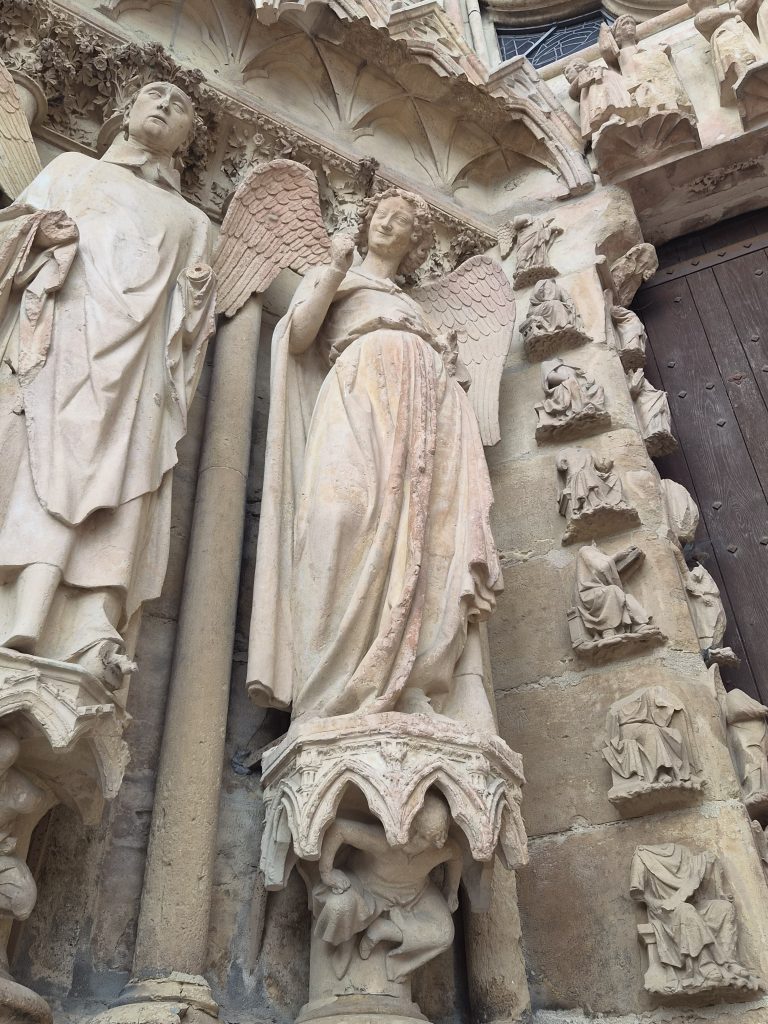
Its reconstruction mirrored the reconstruction of Reims itself.
The city had been devastated.
The cathedral had been scarred.
France had suffered enormous losses.
Yet slowly the angel returned.
By the 1920s the restored sculpture was reinstated, and the image that had once symbolised destruction now symbolised hope and rebirth. Contemporary writers described the event almost poetically: France itself was smiling once more.
Why the Smile Matters
From an art historical perspective, the Smiling Angel represents one of the finest achievements of High Gothic sculpture.
Several features make it exceptional:
Natural facial expression.
Flowing and realistic drapery.
Sense of movement rather than rigid formality.
Emotional connection with the viewer.
Technical mastery of stone carving.
Unlike many medieval figures that appear distant and severe, the Smiling Angel feels approachable and human.
It marks a turning point in Gothic sculpture when artists began exploring realism, personality and emotion. This same movement can be seen throughout Reims Cathedral, where saints converse, angels laugh and biblical figures display recognisable human feelings.
The Angel Today
Today the Smiling Angel remains the most famous sculpture in Reims.It appears on souvenirs, guidebooks, city branding and tourism campaigns. For many visitors, finding the angel on the cathedral façade is almost a pilgrimage in itself.
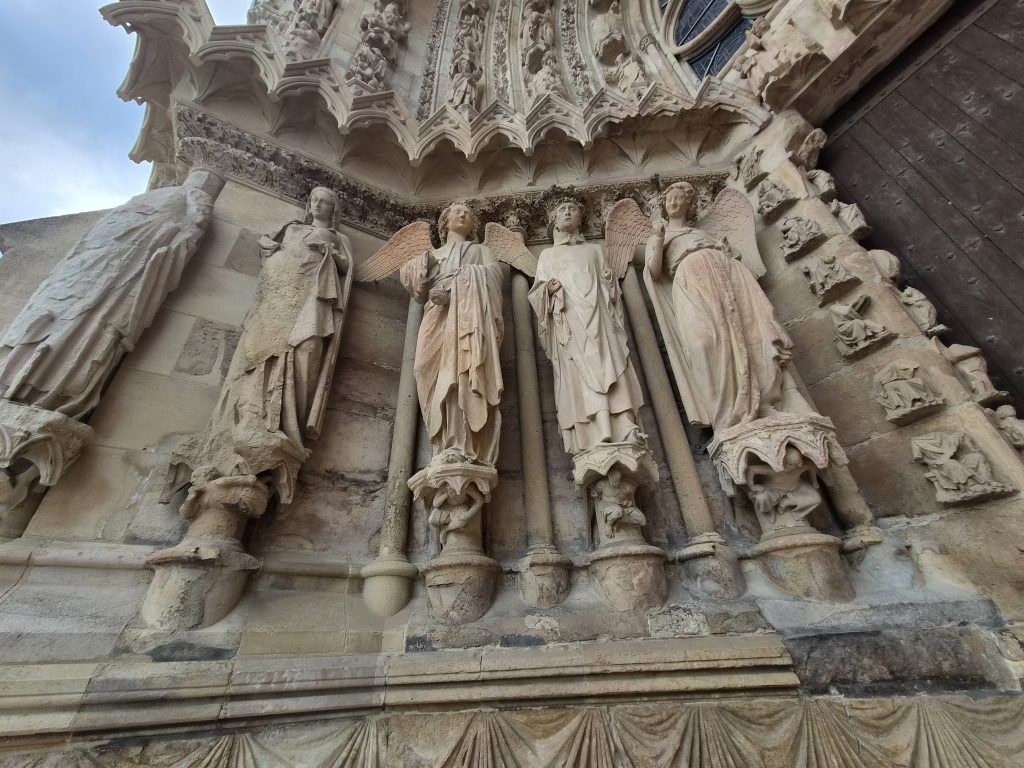
Yet perhaps the true significance of the sculpture lies not in its artistic perfection but in its journey.
Carved in the thirteenth century to celebrate heavenly joy, shattered by war in 1914, painstakingly rebuilt from fragments, and returned to its place overlooking Reims, the Smiling Angel has become far more than a Gothic statue.
It is a monument to endurance.
For over seven centuries it has watched kings crowned, armies march, cathedrals burn and nations rebuild.
And through it all, it has continued to smile.