
A Symphony of Light, Stone and Faith
Rising above the rooftops of Troyes, the Cathedral of Saints Peter and Paul stands as one of France’s most underrated Gothic masterpieces. Overshadowed by the fame of Paris, Reims and Chartres, it quietly rewards those who make the journey with an experience every bit as memorable.
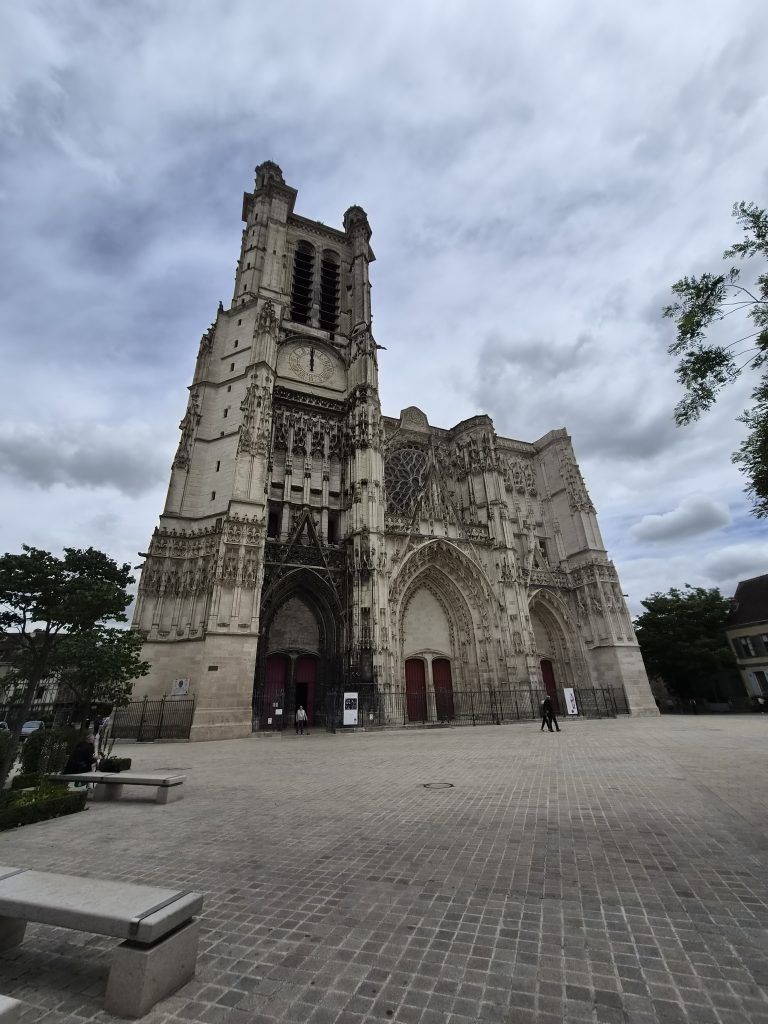
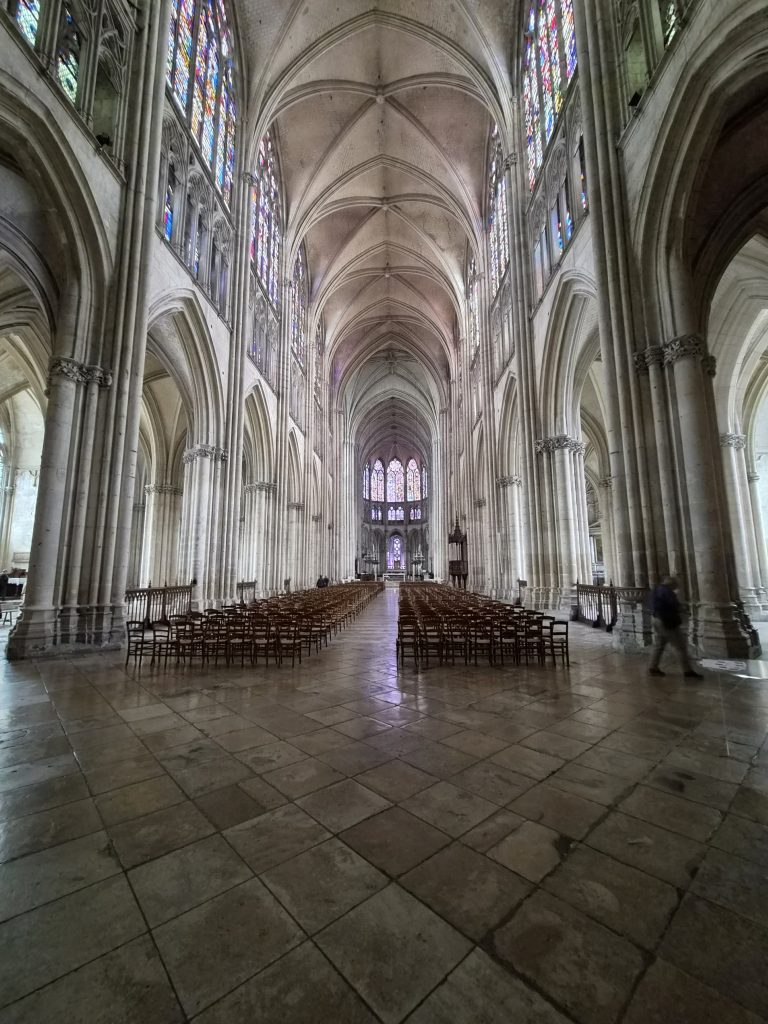
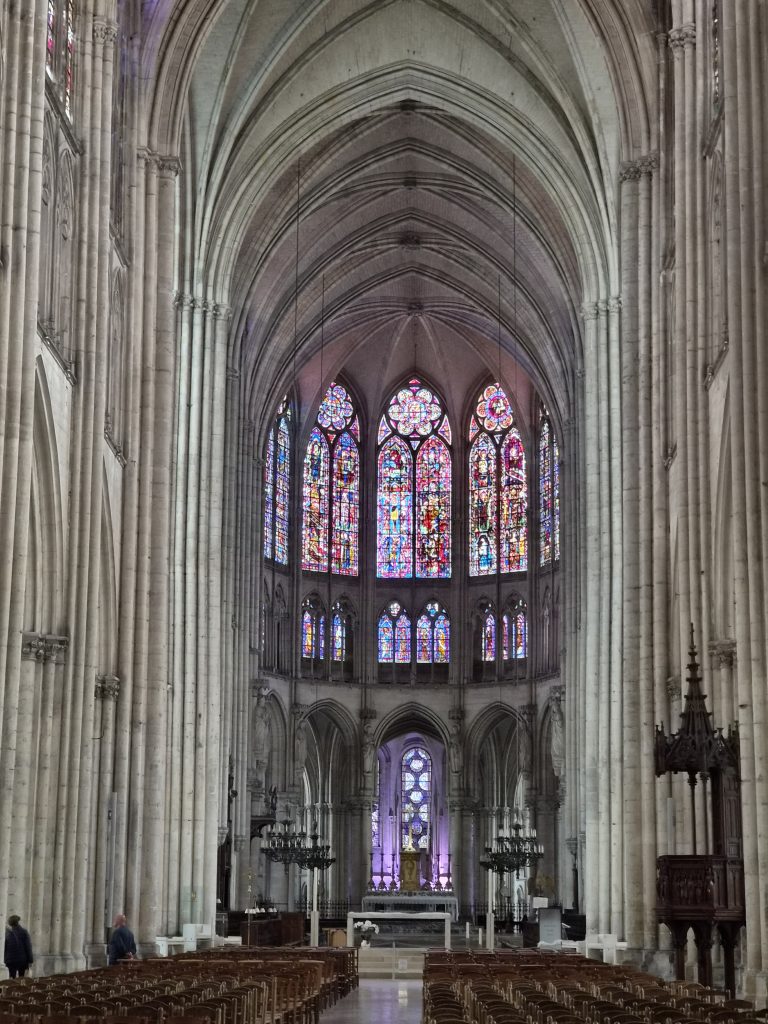
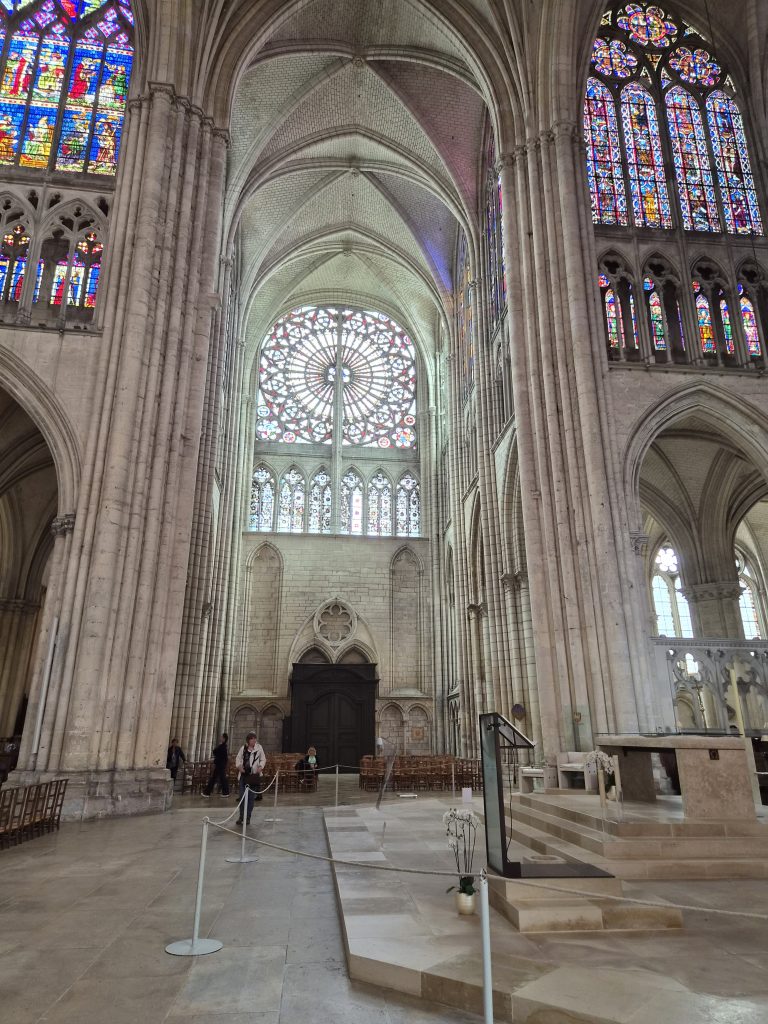
It is a cathedral that reveals itself slowly.
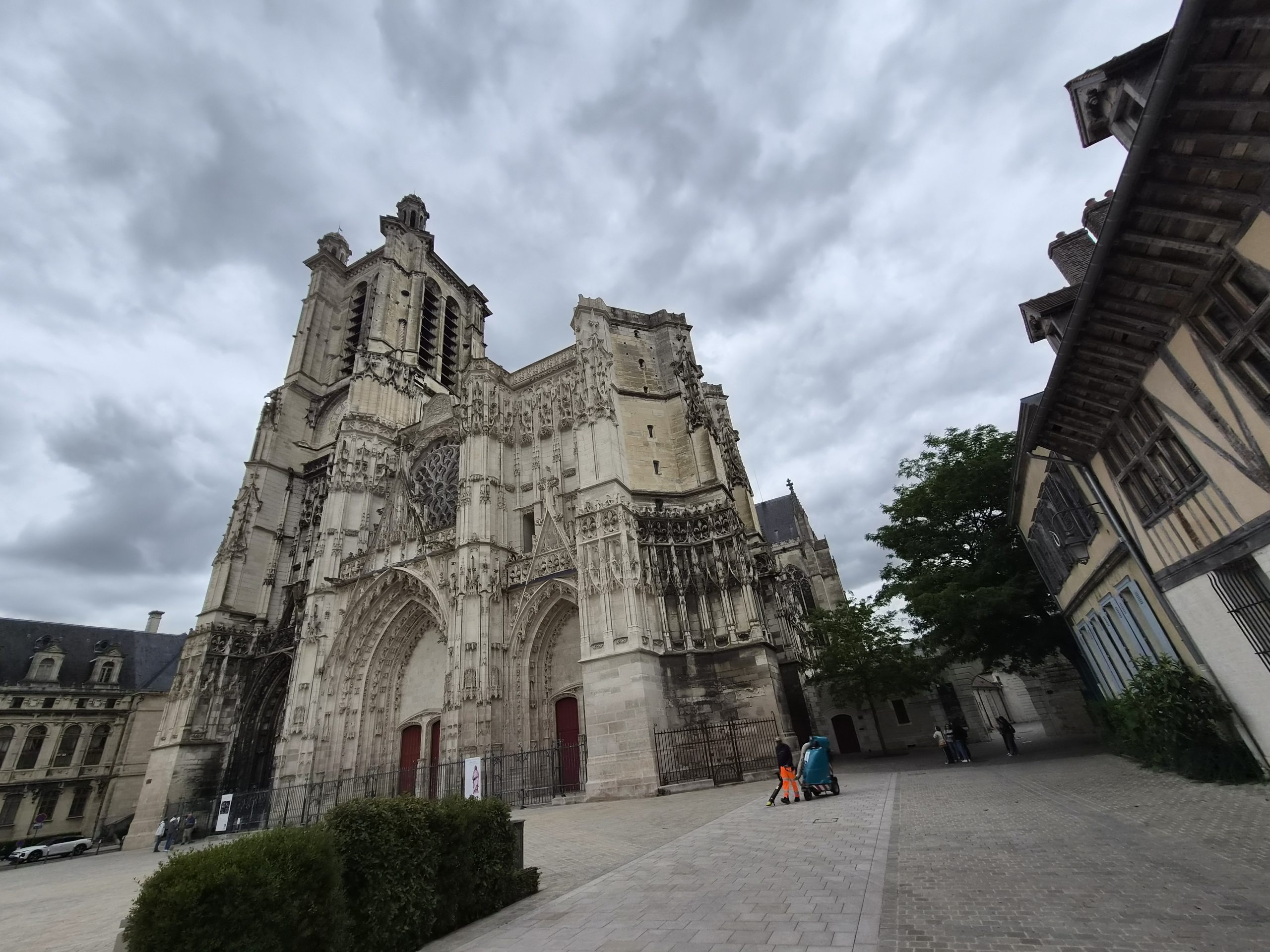
Unlike some of France’s great cathedrals that dominate entire city skylines, Troyes Cathedral emerges gradually from the surrounding streets. Its pale stone walls and soaring windows seem almost to grow from the city itself, a reminder that this monument has stood at the heart of Troyes for more than seven centuries.
Construction began in 1208 following a devastating fire that destroyed an earlier church on the site. Like many medieval cathedrals, it was not built in a generation but over centuries. Master masons, craftsmen, glaziers and sculptors each left their mark as styles evolved and tastes changed. The result is a fascinating blend of High Gothic ambition and later Gothic refinement.
Even today, visitors may notice that the cathedral appears slightly incomplete. One of the western towers was never finished, leaving the façade asymmetrical. Yet rather than detracting from its beauty, it serves as a reminder that medieval cathedrals were living projects, often spanning the lives of dozens of generations.
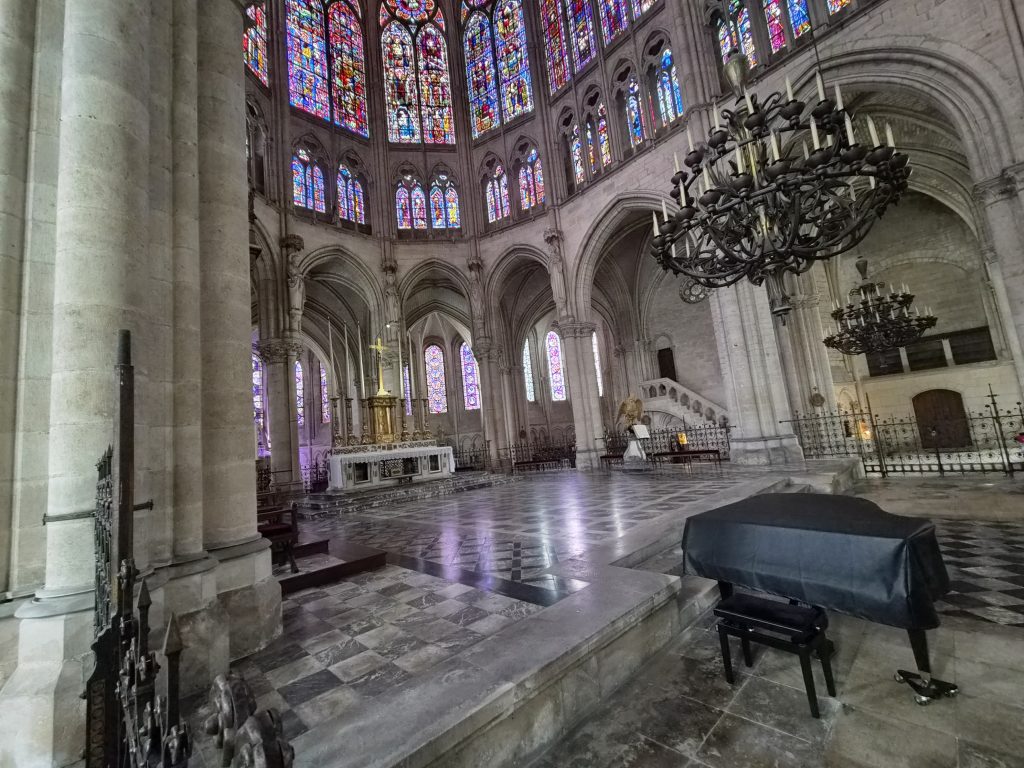
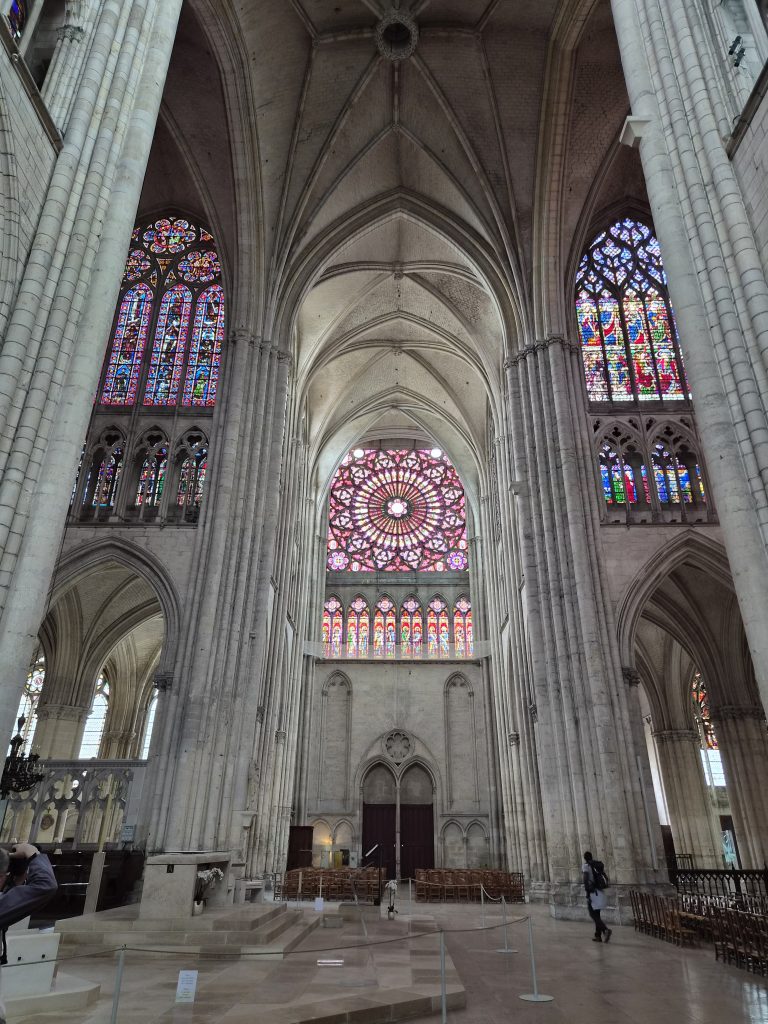
Stepping through the great doors, the first impression is one of height and light.
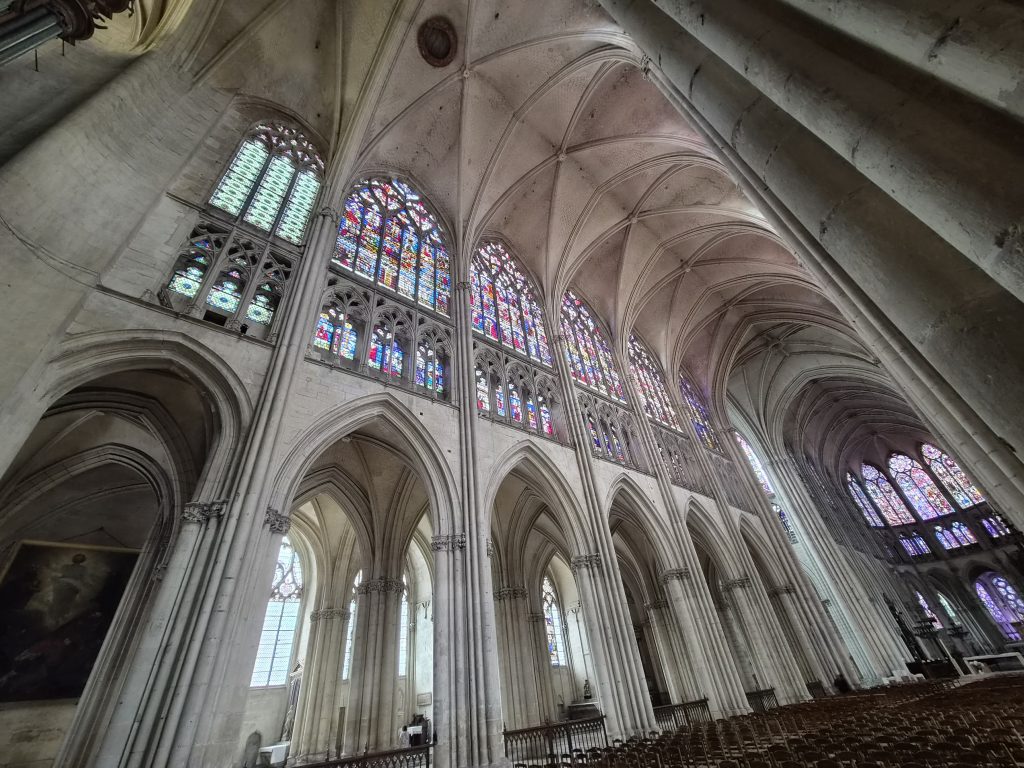
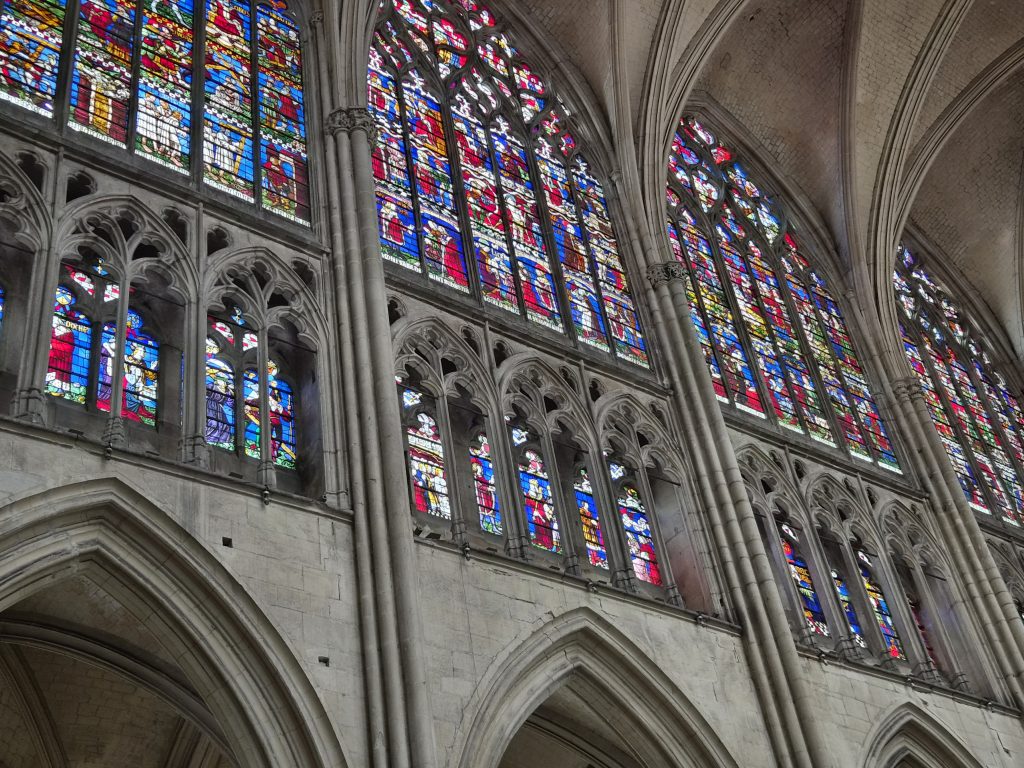
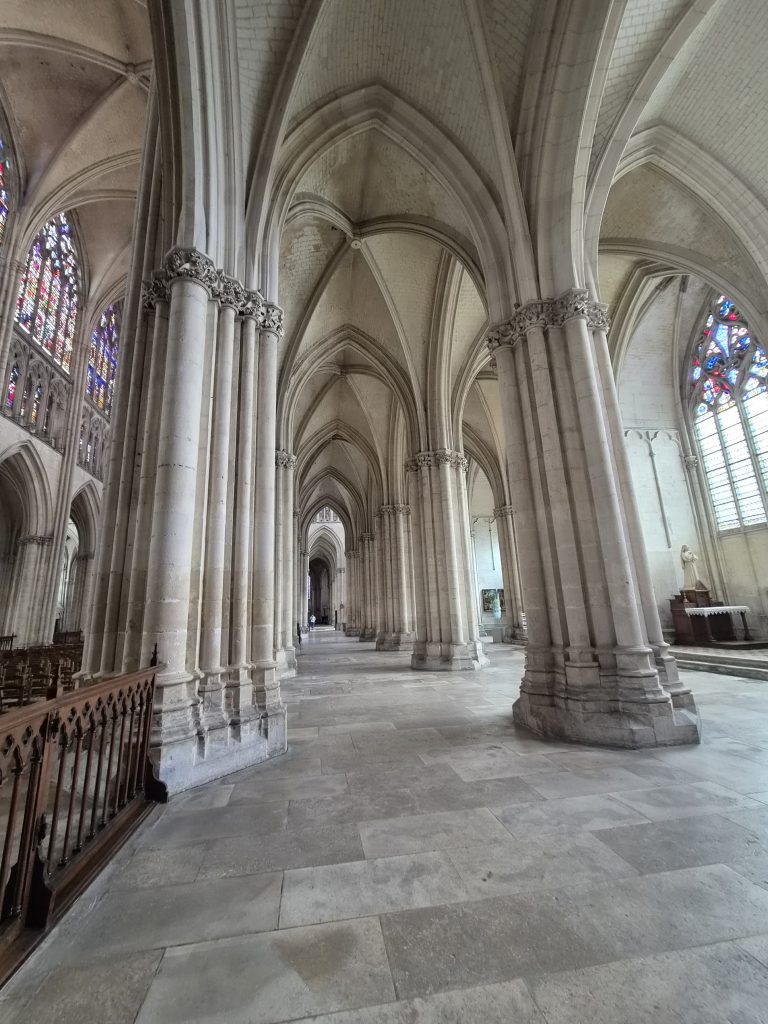
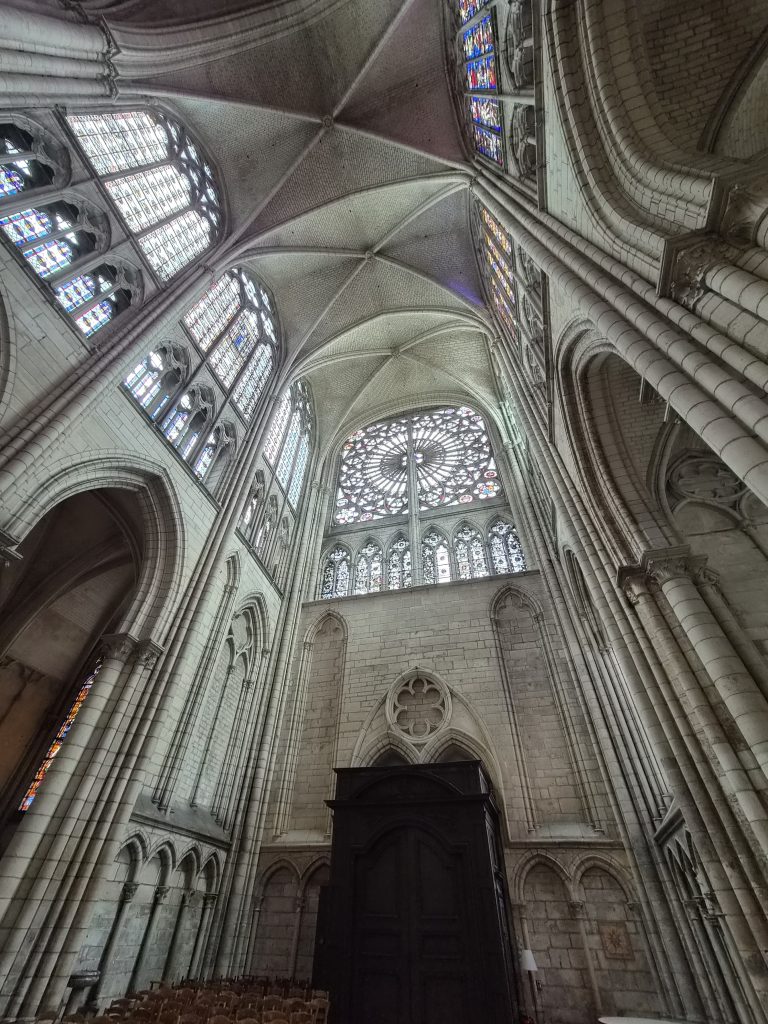
Slender columns rise effortlessly towards vaulted ceilings far above, drawing the eye heavenward. The architecture embodies the central ambition of Gothic design: to create a space that feels closer to God through light, proportion and elevation.
Yet it is the glass that truly defines Troyes Cathedral.
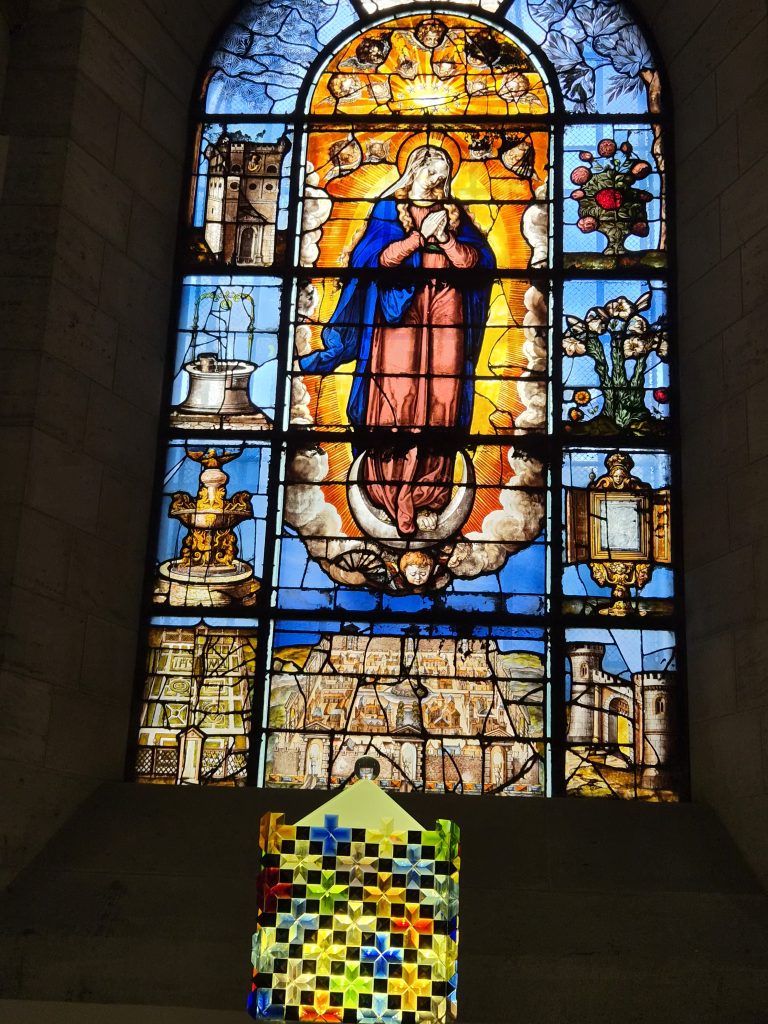
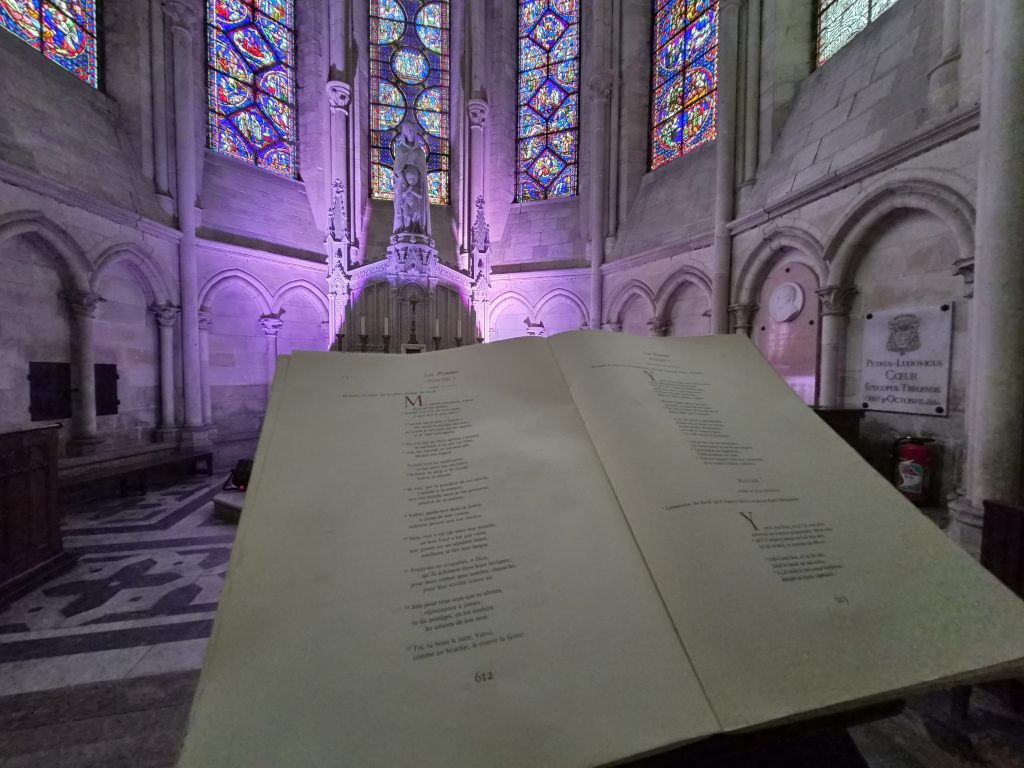
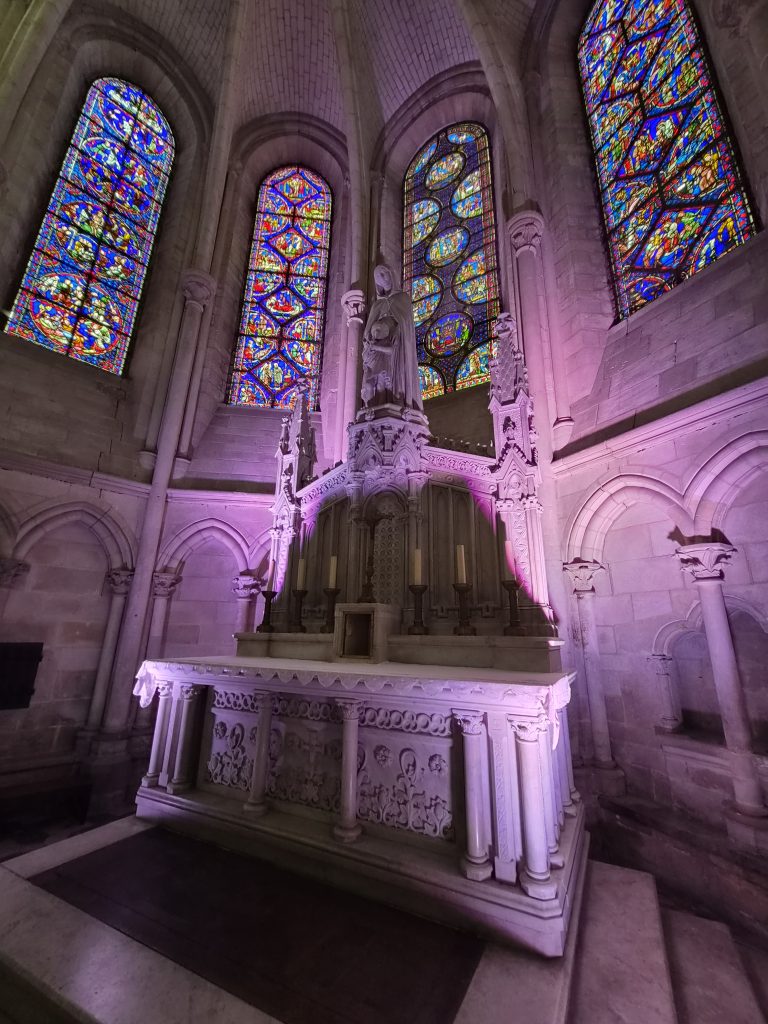
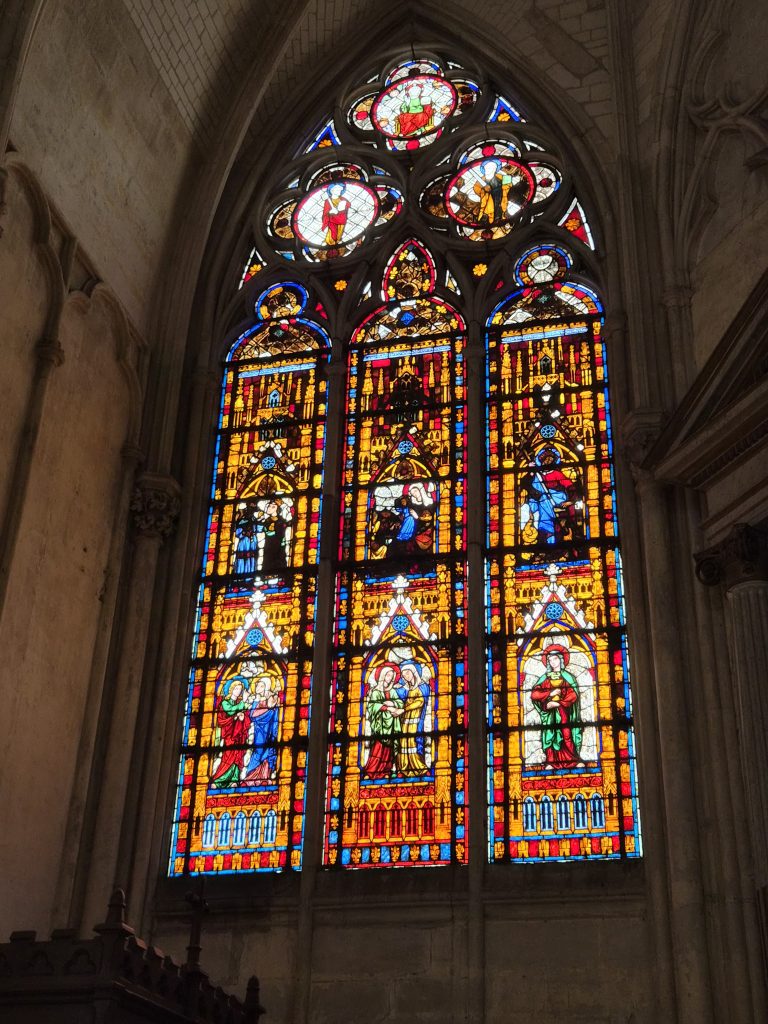
The city of Troyes possesses one of the greatest collections of medieval stained glass in Europe, and the cathedral contains some of its finest examples. More than fifteen centuries of glass-making artistry are represented within its walls, ranging from the 13th century through to the Renaissance.
As sunlight streams through the windows, the interior transforms into a living gallery of colour. Deep blues, brilliant reds and luminous golds wash across the stonework, creating an atmosphere that changes with every passing hour.
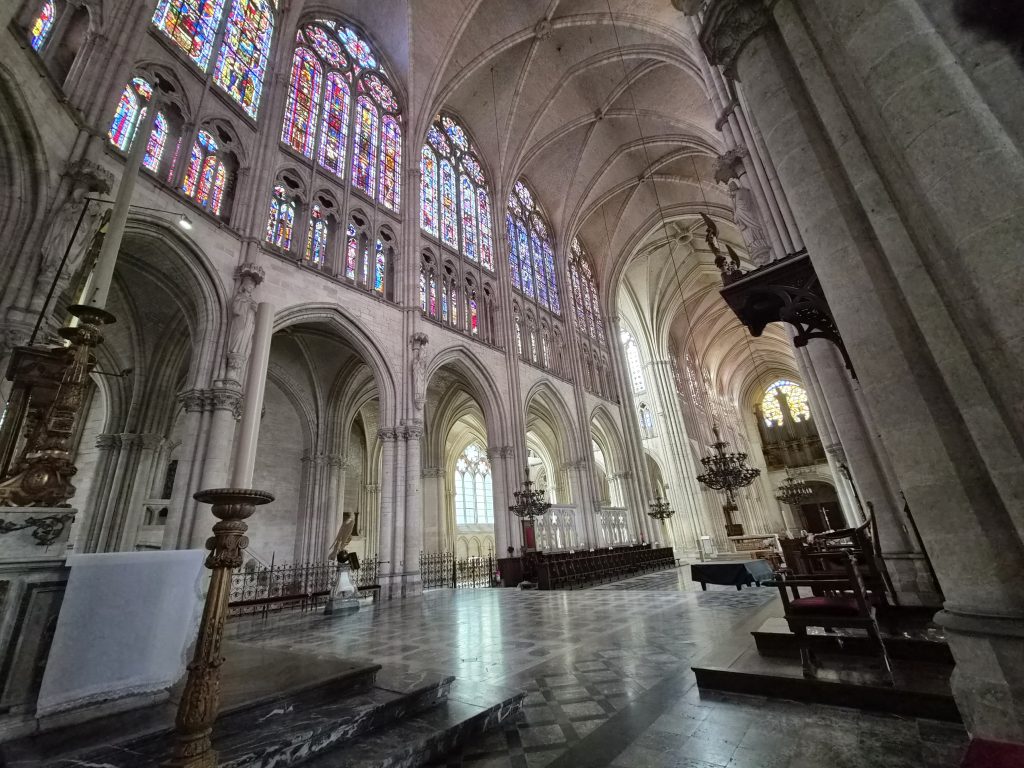
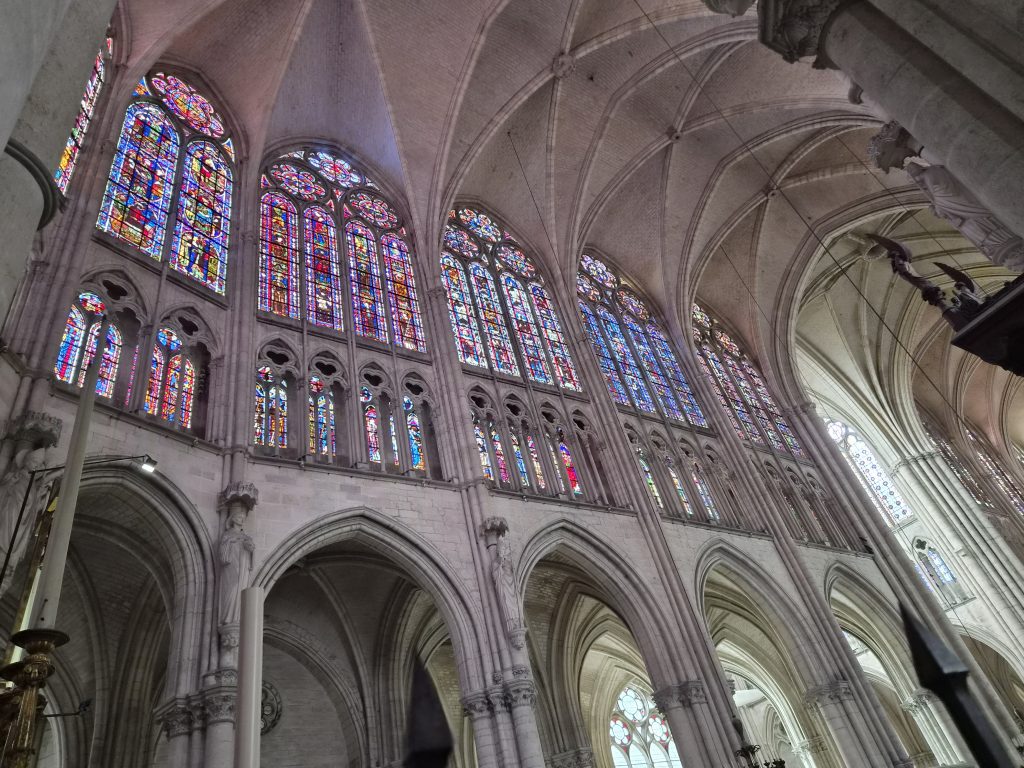
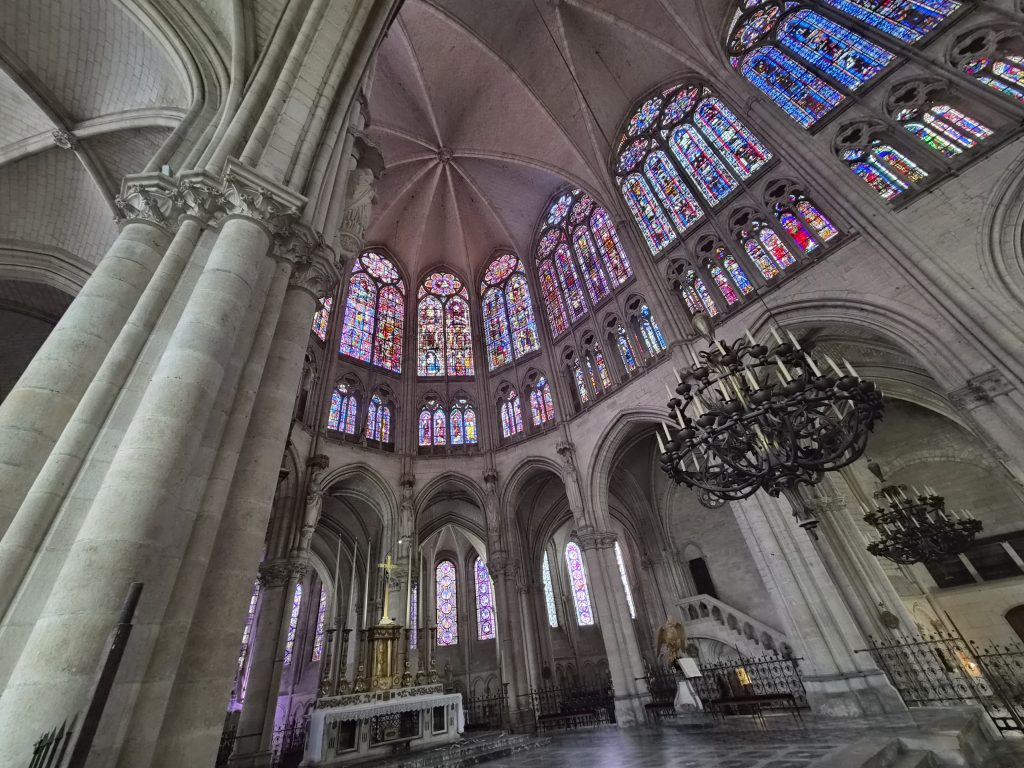
The stained glass served a purpose beyond decoration. In an age when many worshippers could not read, these windows told stories. Biblical scenes, saints, kings, prophets and martyrs all appear in vivid detail. The glass became a visual Bible, teaching scripture through colour and imagery.
Among the cathedral’s greatest treasures are its magnificent rose and oriel windows.
The great rose window, a hallmark of Gothic architecture, radiates intricate patterns that seem almost impossibly delicate when viewed from below. Light filters through countless pieces of coloured glass arranged in geometric perfection, creating a kaleidoscope effect that fills the surrounding stone with colour.
Equally remarkable are the cathedral’s oriel windows, whose elaborate tracery demonstrates the extraordinary skill of medieval craftsmen. Their stone frameworks appear almost lace-like, delicate yet enduring, supporting vast expanses of glass while allowing maximum light to flood the interior.
Together these windows represent the pinnacle of Gothic engineering. Every arch, rib and flying buttress outside exists to support this ambition—to replace heavy stone walls with vast curtains of light.
The cathedral also houses a remarkable collection of historical artefacts and religious treasures accumulated over centuries.
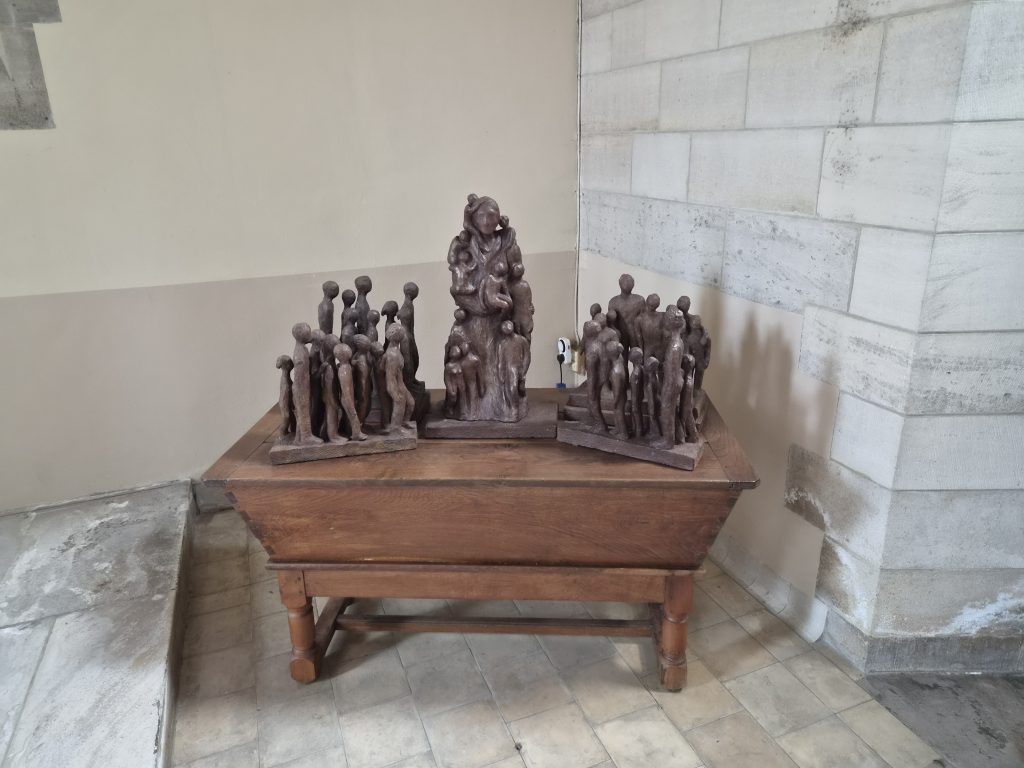
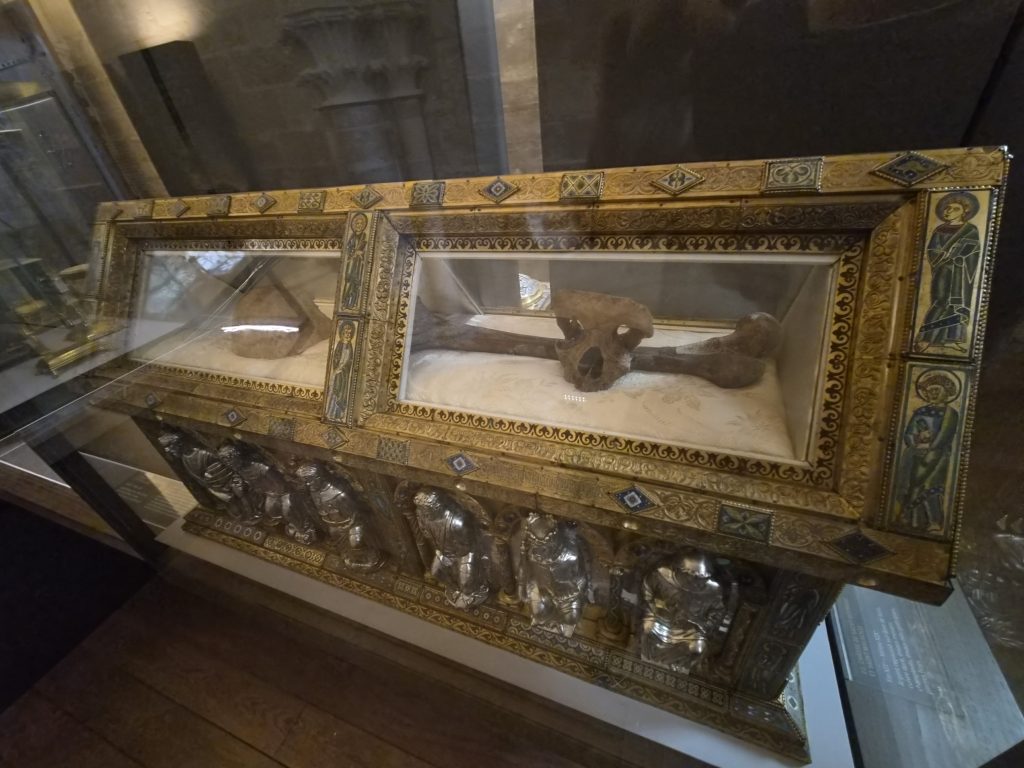
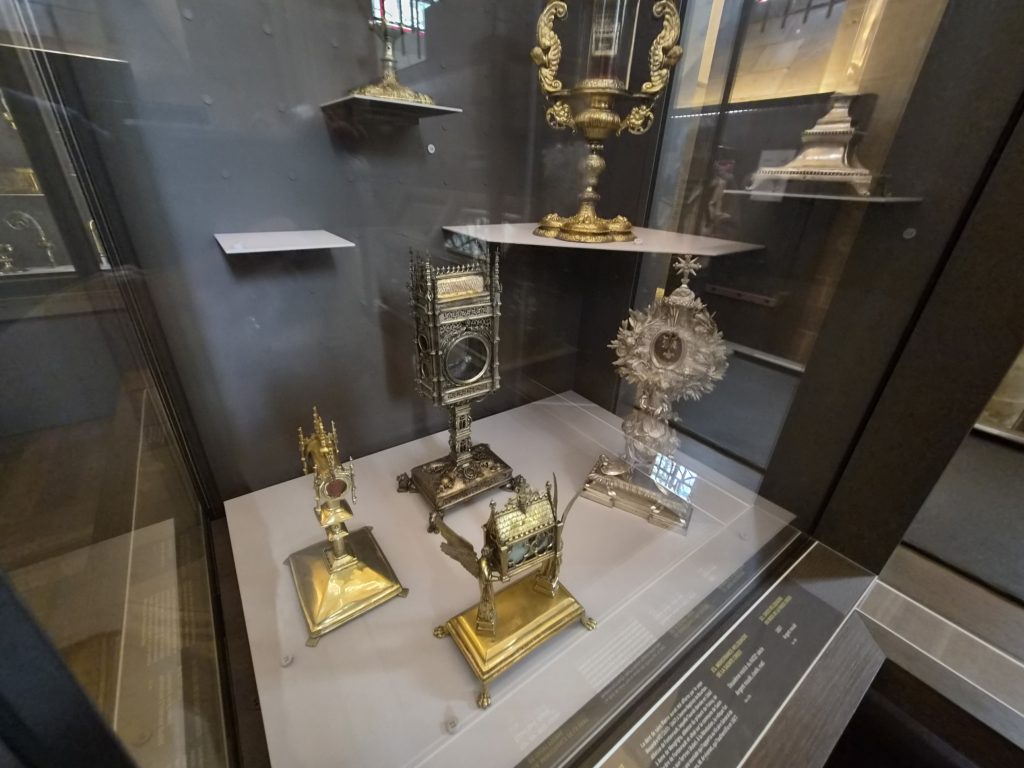
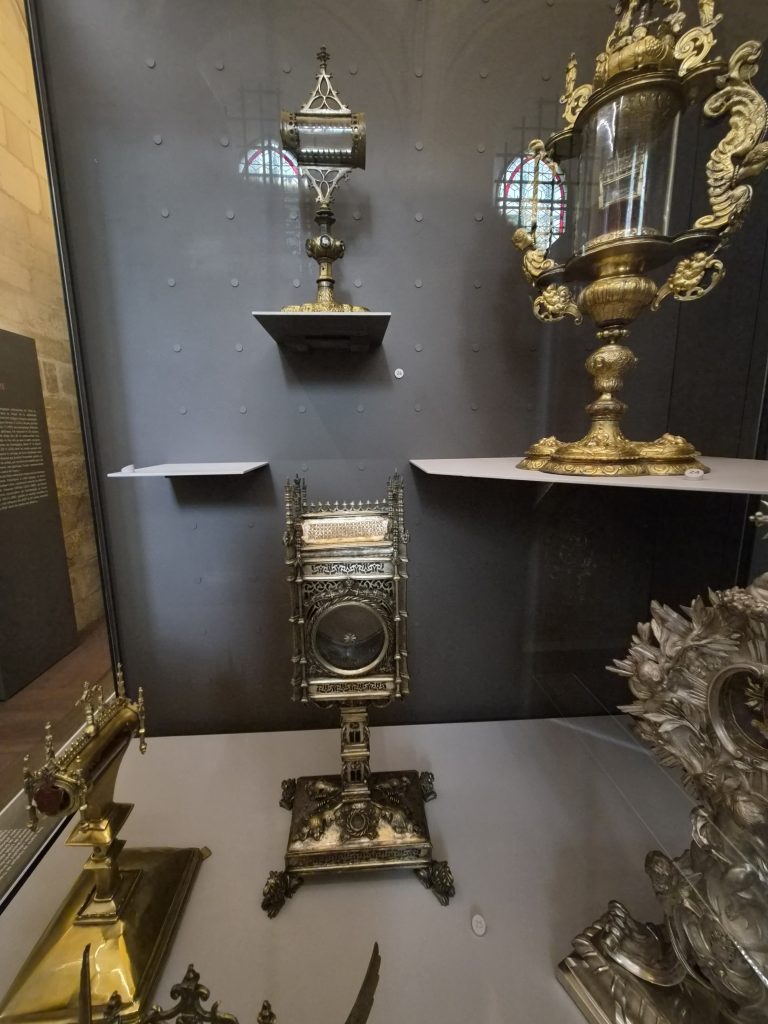
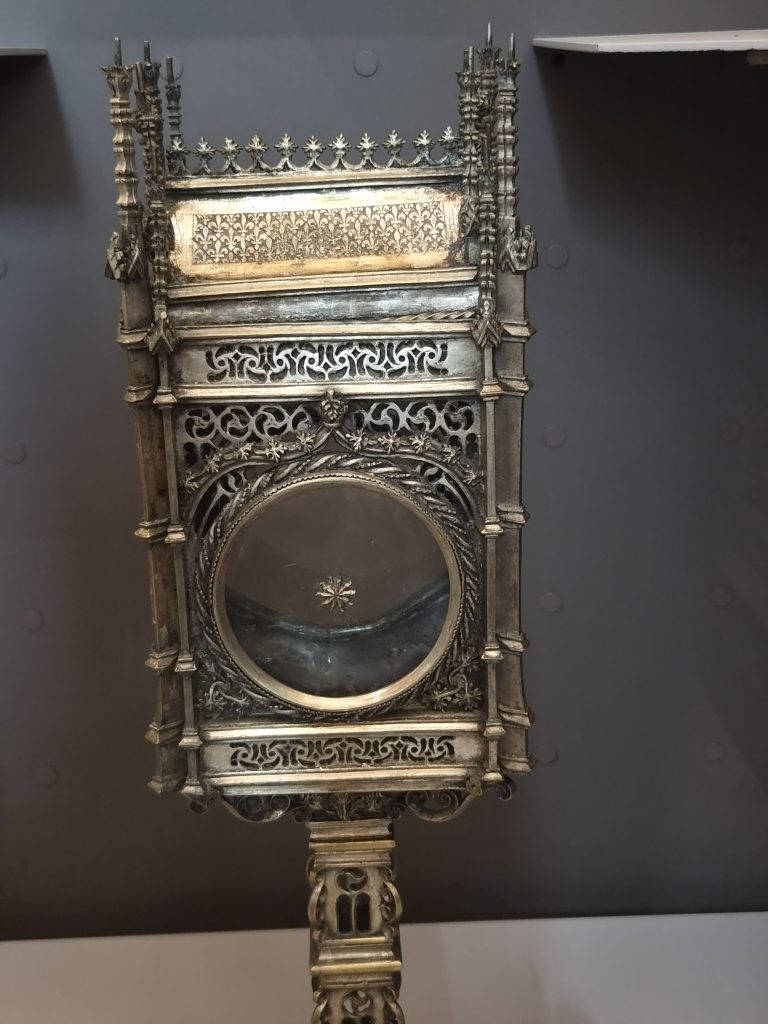
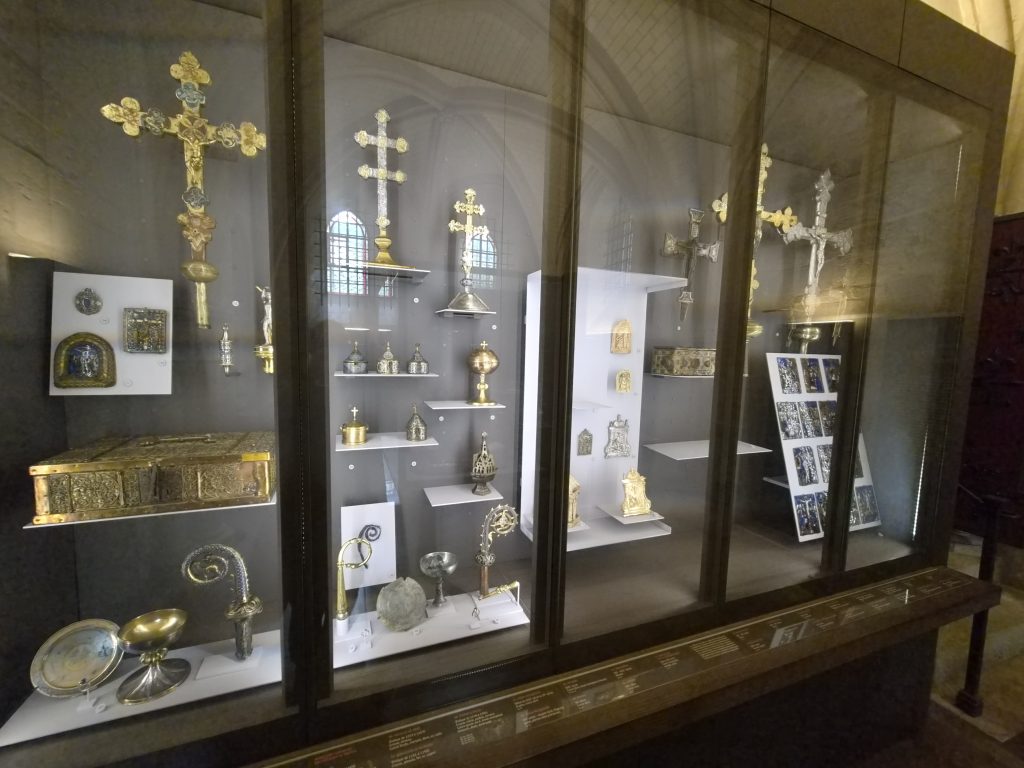
Ancient sculptures line chapels and aisles. Elaborate tombs commemorate bishops and noble families who shaped the history of the region. Finely carved choir stalls reveal the skill of medieval woodworkers, while sacred vessels and liturgical objects speak of generations of worship conducted within these walls.
Perhaps most impressive are the surviving examples of Renaissance craftsmanship found throughout the cathedral. Delicate stone carvings, ornate chapels and richly detailed statuary illustrate how Troyes became a centre of artistic excellence during the late medieval and early modern periods.
The cathedral has witnessed some of the most turbulent moments in French history. It endured the upheavals of the Hundred Years’ War, survived the Wars of Religion, and weathered the storms of the French Revolution. Through each age it remained a constant presence, standing watch over the city as kingdoms rose and fell around it.
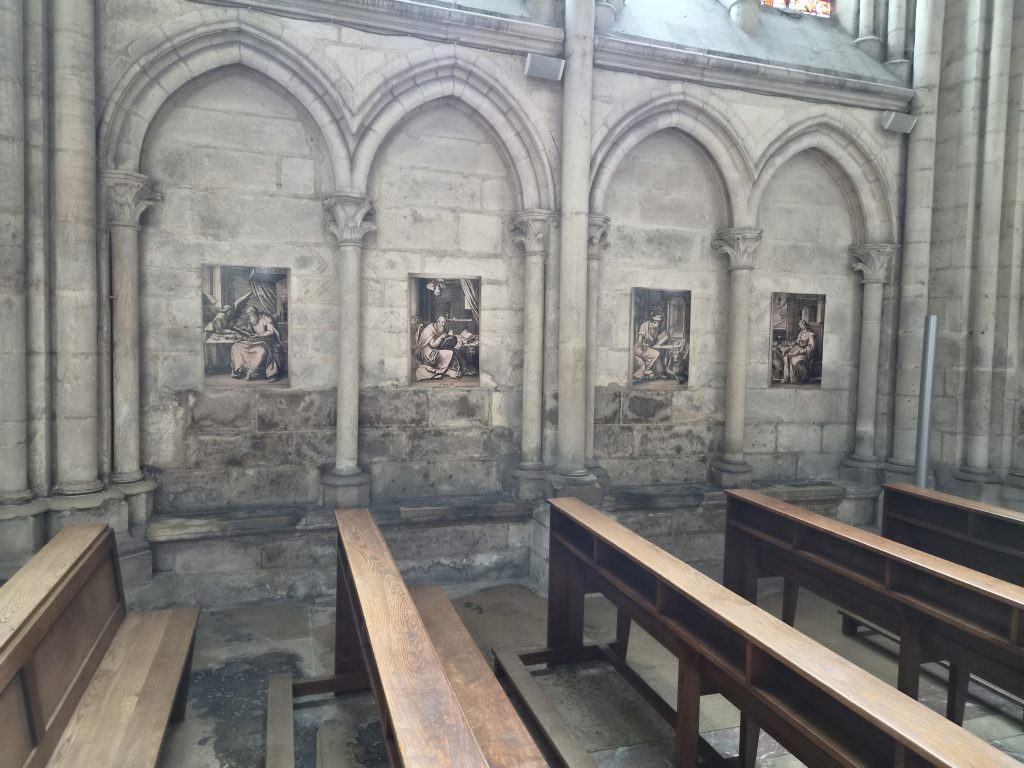
Today, visitors encounter something more than an architectural monument.
There is a sense of continuity here. The same coloured light that illuminated medieval pilgrims still dances across the floor. The same stone columns that inspired generations of worshippers continue to rise towards the heavens. The same windows continue to tell stories centuries after the craftsmen who created them have been forgotten.
In many ways, Troyes Cathedral embodies the very essence of Gothic architecture. It is not simply a building of stone, but a carefully orchestrated composition of structure, light, art and faith.
While larger cathedrals may attract greater crowds, few offer such an intimate opportunity to appreciate the genius of the medieval builders. Here, away from the busiest tourist routes, the visitor can stand beneath soaring vaults, watch sunlight ignite centuries-old glass, and experience one of France’s finest Gothic treasures in relative peace.
Troyes Cathedral is not merely a place to visit.
It is a place to pause, to look upward, and to marvel at what human hands were capable of creating when faith, artistry and ambition came together in stone and light.