
A Church of Light, A Monument to Memory
Standing proudly within the old walls of Saint-Lô, Eglise Notre-Dame du St Lo is one of Normandy’s finest yet often overlooked examples of Flamboyant Gothic architecture. Begun during the late thirteenth century and developed over the following three centuries, the church represents the final flowering of the medieval Gothic tradition before the Renaissance began to reshape European architecture. While many visitors are drawn to the great cathedrals of Rouen or Bayeux, Eglise Notre-Dame Du St Lo possesses a quieter beauty—one born not only of its elegant design but also of the extraordinary history etched into its very stones.
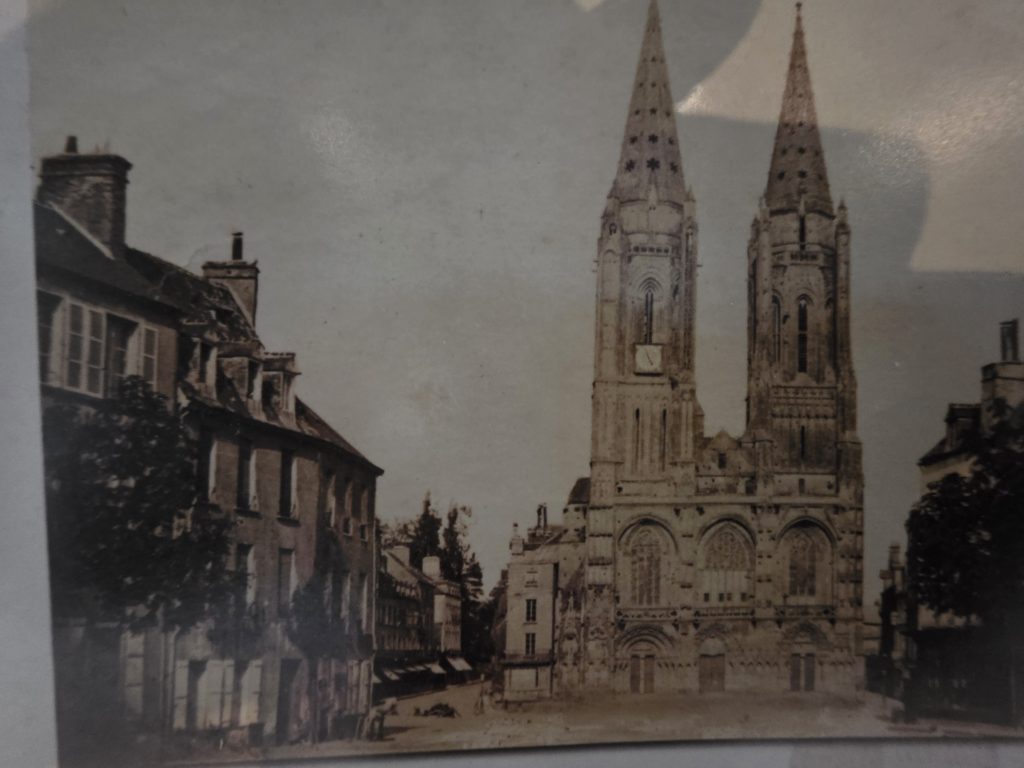
The term Flamboyant Gothic derives from the French word flamme—flame—and nowhere is its meaning more apparent than in the church’s magnificent west façade. Here, the window tracery twists and curls like tongues of fire carved from stone. Richly moulded doorways, crocketed pinnacles, delicate openwork balustrades and intricate carvings create an impression that the masonry itself has become as light as lace. Unlike the earlier Gothic churches, whose innovation lay in engineering, Flamboyant Gothic celebrated artistic refinement. By the time Eglise Notre-Dame du St Lo reached its final form, medieval builders had mastered the structural challenges of pointed arches, rib vaults and flying buttresses. Their ambition had shifted towards beauty, transforming solid stone into something that seemed almost weightless.
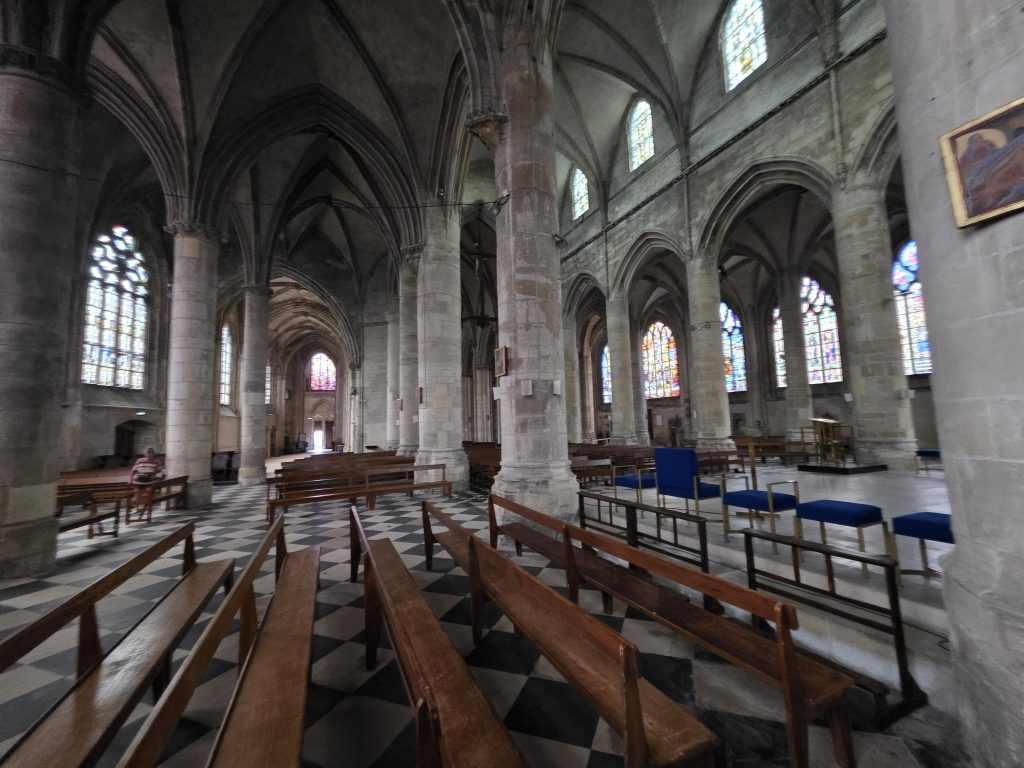
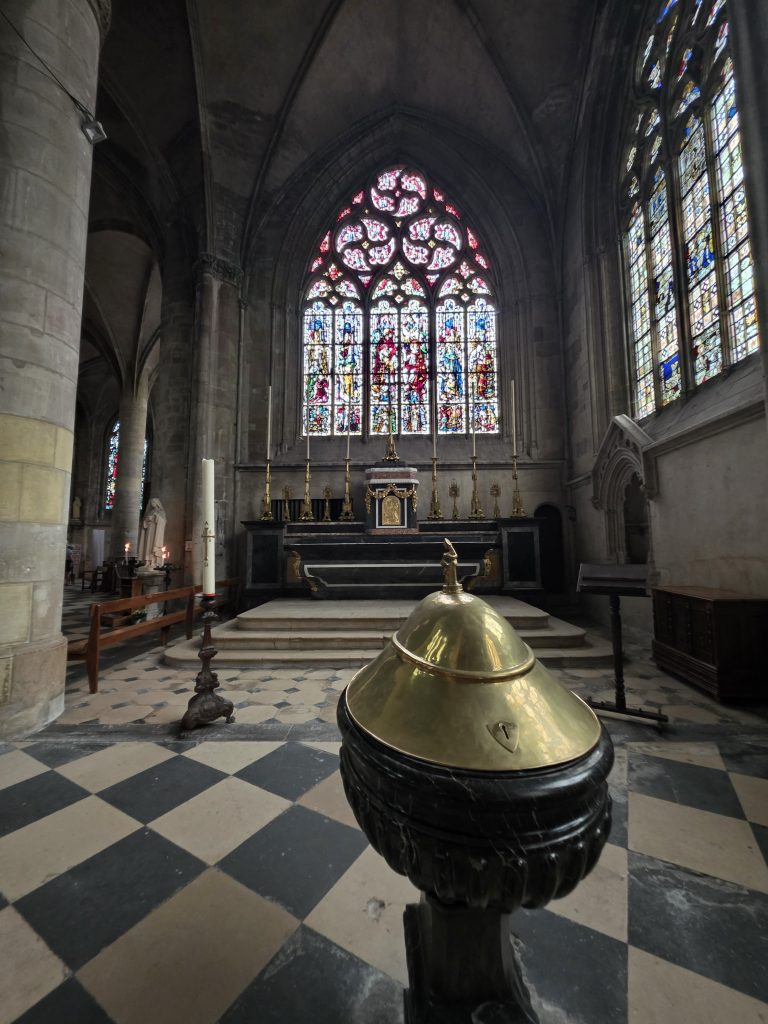
The interior reflects this same philosophy. Tall clustered columns rise effortlessly to graceful ribbed vaults, while broad side aisles create an unusually open and unified space. Unlike many of France’s great cathedrals, there is a noticeable absence of numerous side chapels. As a prosperous parish church rather than the seat of a bishop, Eglise Notre-Dame du St Lo did not require the multitude of private chapels commissioned by wealthy patrons or religious guilds elsewhere. The result is an interior of remarkable clarity. Nothing distracts from the soaring height of the nave or the uninterrupted journey of the eye towards the sanctuary. It is a space filled with light rather than clutter, allowing the architecture itself to become the principal act of devotion.
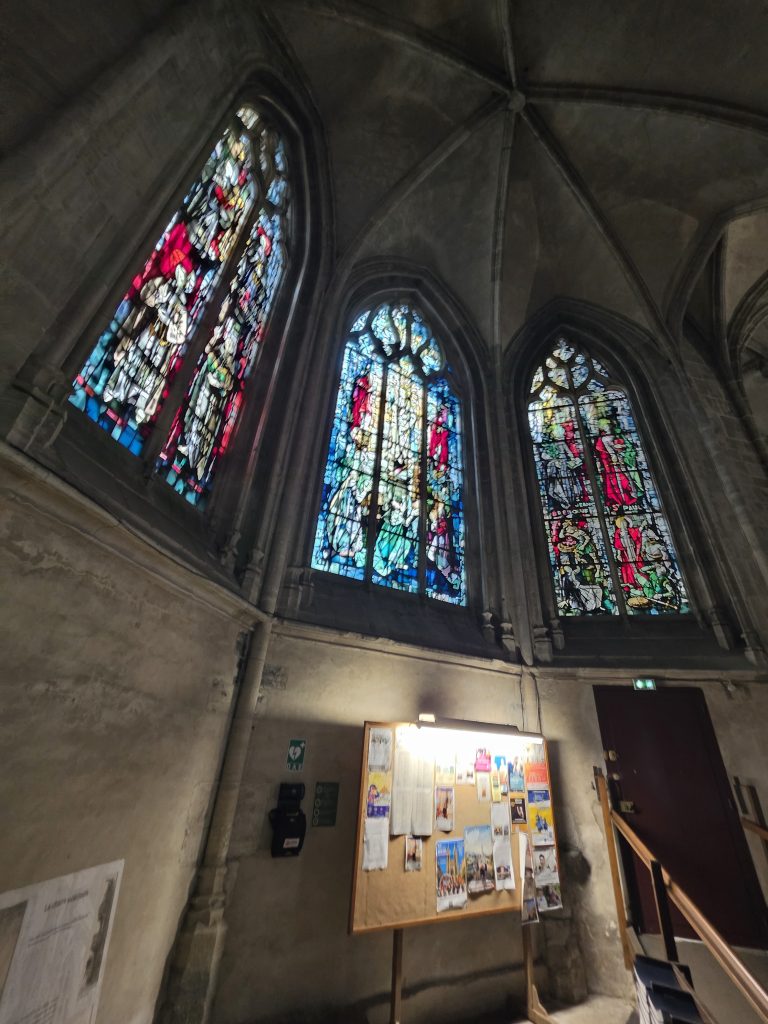
The vast windows, framed by flowing flame-like tracery, once flooded the church with coloured light from its medieval stained glass. To the medieval mind, this was not merely decoration but theology expressed through architecture. Divine light symbolised the presence of God, transforming stone walls into a living canvas of colour throughout the changing hours of the day. Eglise Notre-Dame du St Lo was built not simply to shelter worshippers but to lift their thoughts heavenward through proportion, light and craftsmanship.
Yet today, it is impossible to admire the church without also seeing the scars left by the twentieth century. During the Battle of Saint-Lô in the summer of 1944, the town became one of the pivotal objectives of the Normandy campaign. Weeks of bombing and artillery devastated the medieval city, destroying almost ninety-five per cent of its buildings and earning Saint-Lô the haunting title of The Capital of Ruins. Eglise Notre-Dame du Dt Lo itself suffered catastrophic damage. Its roof collapsed, vaults were shattered, the north tower was heavily damaged, and much of its interior lay exposed beneath the open sky. It seemed, for a time, that centuries of craftsmanship had been erased in a matter of days.
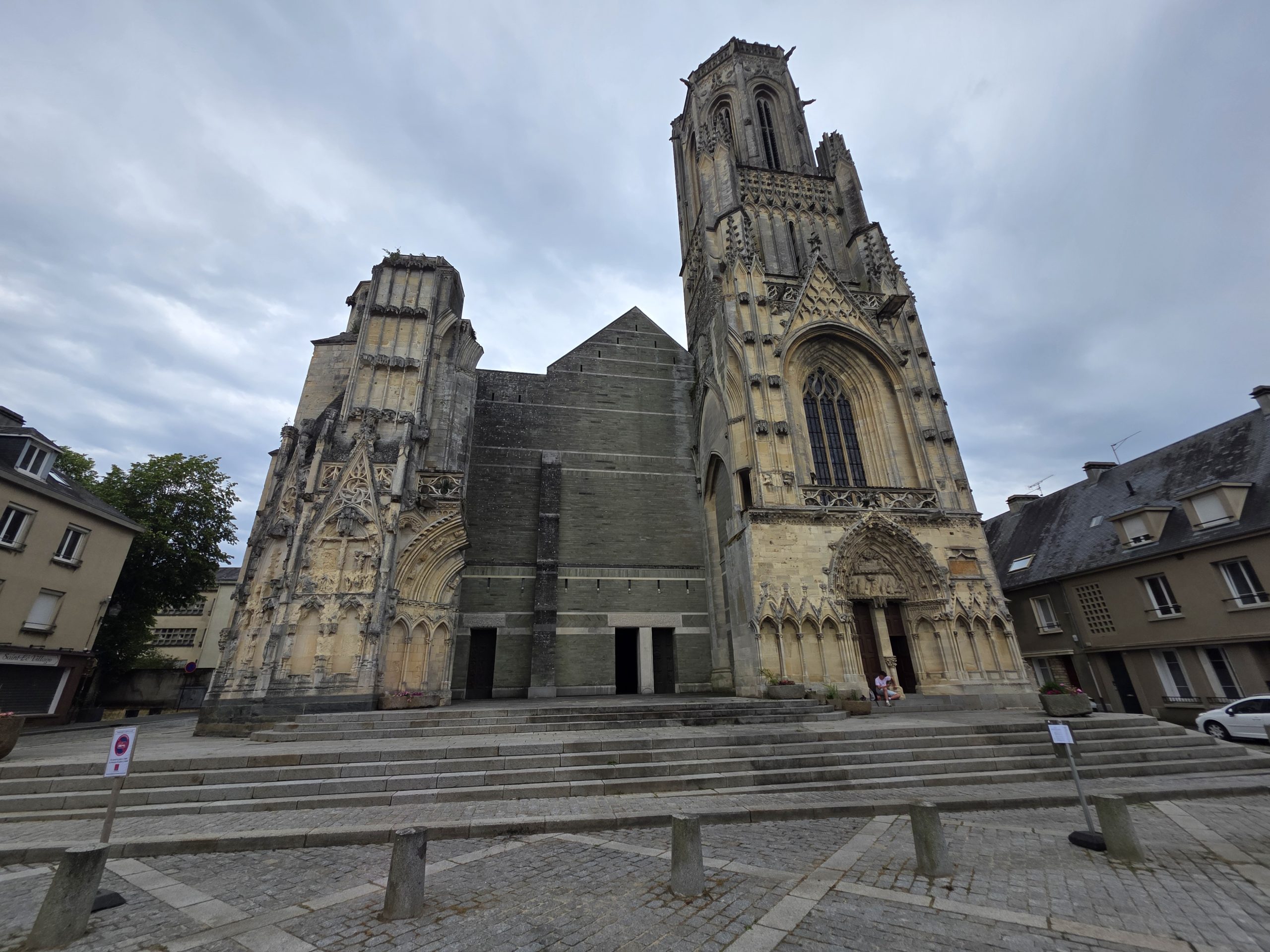
Remarkably, the church survived. Even more remarkably, many of its medieval stained-glass windows had been removed for safekeeping before the bombardment began, preserving treasures that might otherwise have been lost forever. During the post-war reconstruction, architects chose not to disguise every wound. Instead, elements of the restored façade deliberately reveal the distinction between medieval stone and twentieth-century repair. Rather than erase history, they allowed the building to remember.
Those scars speak not only of the Second World War but of the contradictions within humanity itself. Built as a sanctuary of peace, hope and reconciliation, Eglise Notre-Dame’s soaring Gothic arches were never intended to withstand artillery fire or aerial bombardment. Yet its fractured masonry stands as a permanent witness to mankind’s extraordinary capacity for destruction.
Statues are scarred by the circumstances of war.
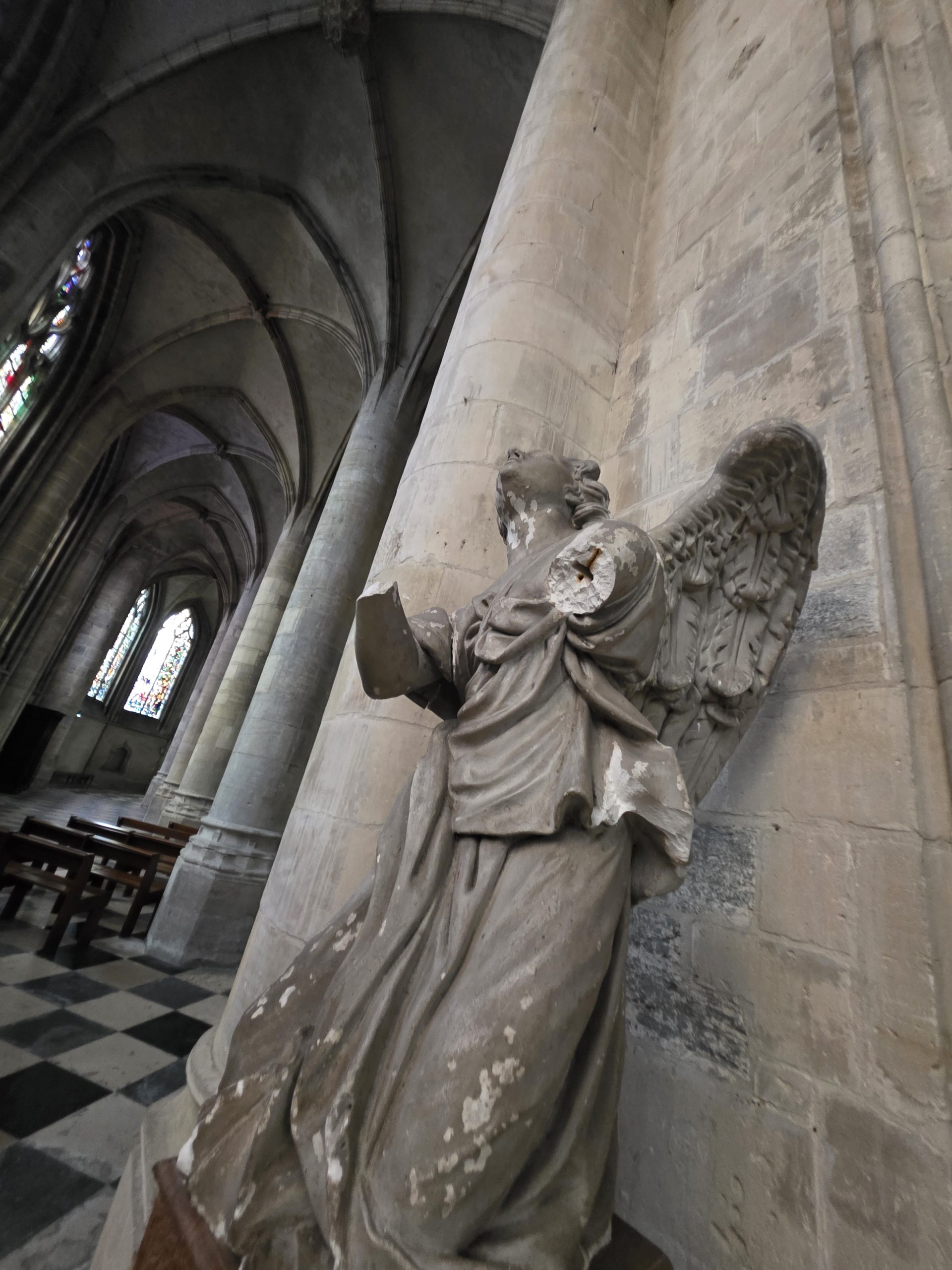
There is perhaps no greater irony than a place dedicated to worship becoming a casualty of war. Churches, cathedrals and temples are raised to inspire compassion, humility and reflection. They represent humanity at its most creative and aspirational. Yet history repeatedly reminds us that no creation of human hands—however sacred—is beyond the reach of human conflict. Bullets do not distinguish between soldier and sanctuary. Bombs do not pause for prayer. In war, even those buildings raised to honour God become victims of mankind’s own failings.
The damaged fabric of Eglise Notre-Dame du Dt Lo therefore stands as far more than an architectural monument. It has become a moral one. Its repaired walls challenge us to confront an uncomfortable truth: civilisation is capable of producing both breathtaking beauty and unimaginable destruction. The same civilisation that carved delicate tracery from stone, lifted graceful vaults towards heaven and filled vast windows with radiant light also possessed the means to reduce those achievements to rubble.
Yet within those scars lies hope. The decision to restore rather than replace, to preserve the visible wounds rather than erase them, acknowledges that remembrance is itself an act of resilience. Eglise Notre-Dame du Saint-Lô reminds us that while humanity is capable of terrible violence, it is equally capable of renewal, reconciliation and rebuilding.
As visitors leave the church and step back into the rebuilt streets of Saint-Lô, they carry with them more than an appreciation of Gothic architecture. They leave having encountered a building that embodies both the heights of human creativity and the depths of human conflict. Its stones ask a question that transcends history itself: if even our most sacred places are not immune from the consequences of hatred and war, what greater responsibility rests upon us to ensure that such destruction is never happens again? For in the end, the greatest monument is not the church itself, but the enduring hope that one day humanity will learn to value its creations more than its conflicts.