
There are places in the world where history speaks through monuments, where museums explain the past through artefacts and words. And then there are places where history needs no interpreter at all.
The American military cemeteries overlooking Omaha Beach and at Cherbourg are among those places.
You do not hear the war here. You hear the silence that followed it.
Thousands upon thousands of white marble crosses stretch across perfectly tended lawns, broken only occasionally by a Star of David. Every stone represents a son, a brother, a husband, a friend. Every one was once a child who laughed, dreamed, hoped and loved. Each had plans beyond the battlefield. Yet all those futures ended here.
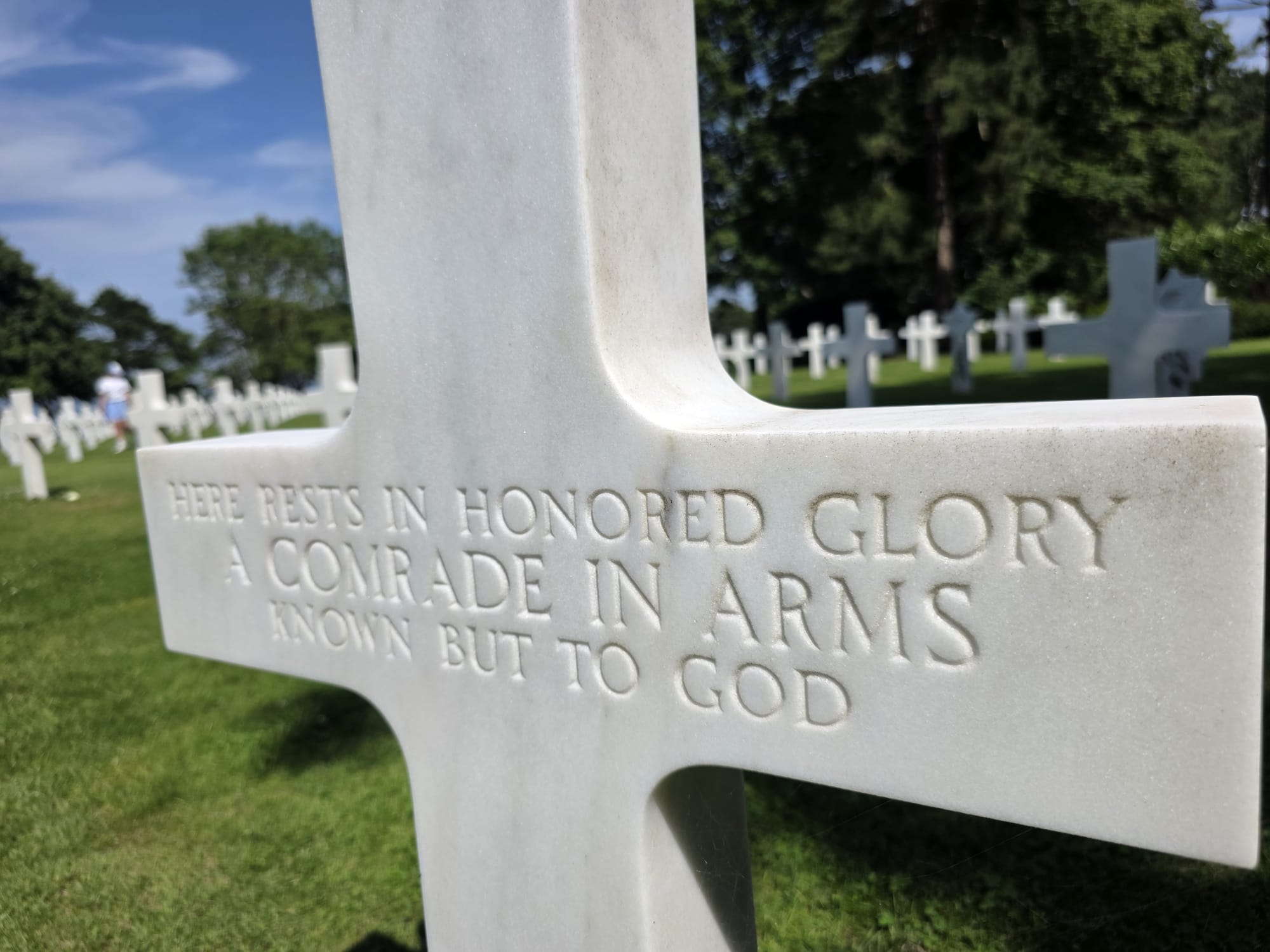
The most haunting inscription is not upon the named graves, but upon those whose names have been lost forever:
“Here rests in honoured glory a comrade in arms known but to God.”
There is something profoundly humbling about those words.
Not because they invoke God.
But because they acknowledge that humanity itself failed to remember who these men were.
Walking between the endless rows, I found myself asking a question that every generation should ask of itself.
By what authority does any man possess the right to command the deaths of so many?
Kings have done it.
Presidents have done it.
Prime ministers have done it.
Emperors, dictators, revolutionaries and generals have all believed themselves justified.
Some claimed God was on their side.
Others claimed history.
Others claimed nation.
Others claimed destiny.
Yet beneath every justification lies exactly the same reality.
A young man dies.
Then another.
Then another.
Until thousands become statistics instead of people.
Standing among these graves, it becomes impossible to think in numbers.
Ten thousand.
Twenty thousand.
One hundred thousand.
Millions.
Those figures lose meaning until you stand before row after row after row of marble.
Only then do numbers become human again.
Each cross reminds us that civilisation is measured not by how effectively it wages war, but by how desperately it strives to avoid it.
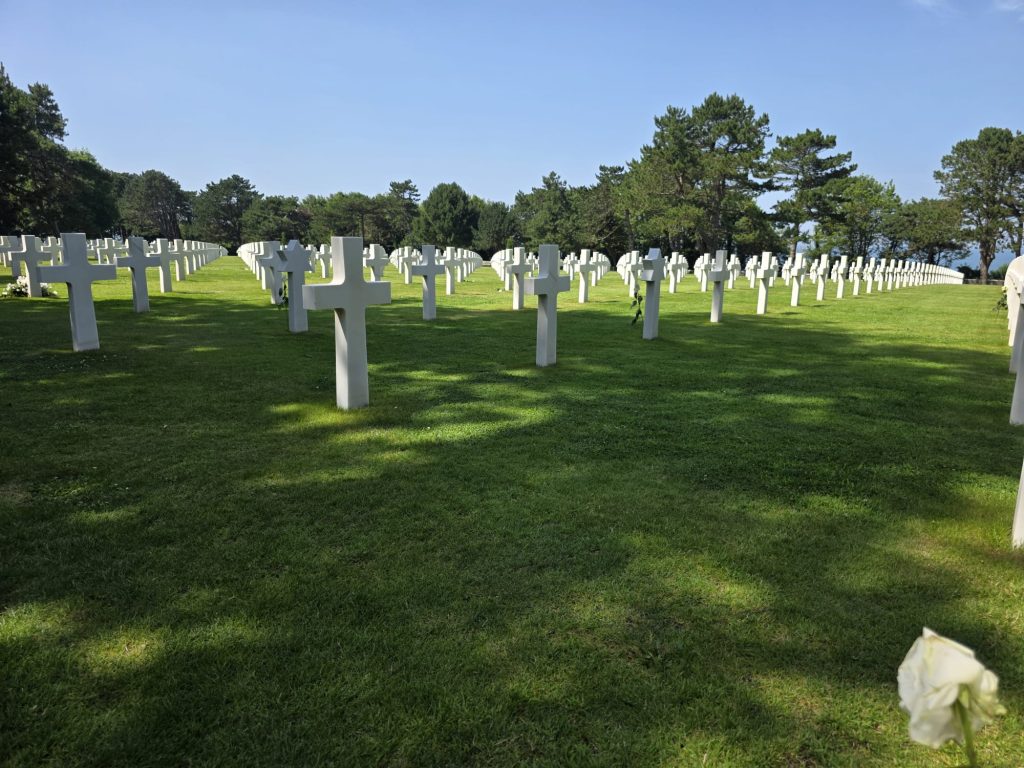
There are wars that history may judge to have been necessary.
The liberation of Europe from Nazi tyranny is one that many would argue could not have been avoided once that evil had been unleashed.
But recognising necessity is not the same as celebrating war.
These cemeteries are not monuments to victory.
They are monuments to cost.
The victories were won on the beaches.
The price is paid here.
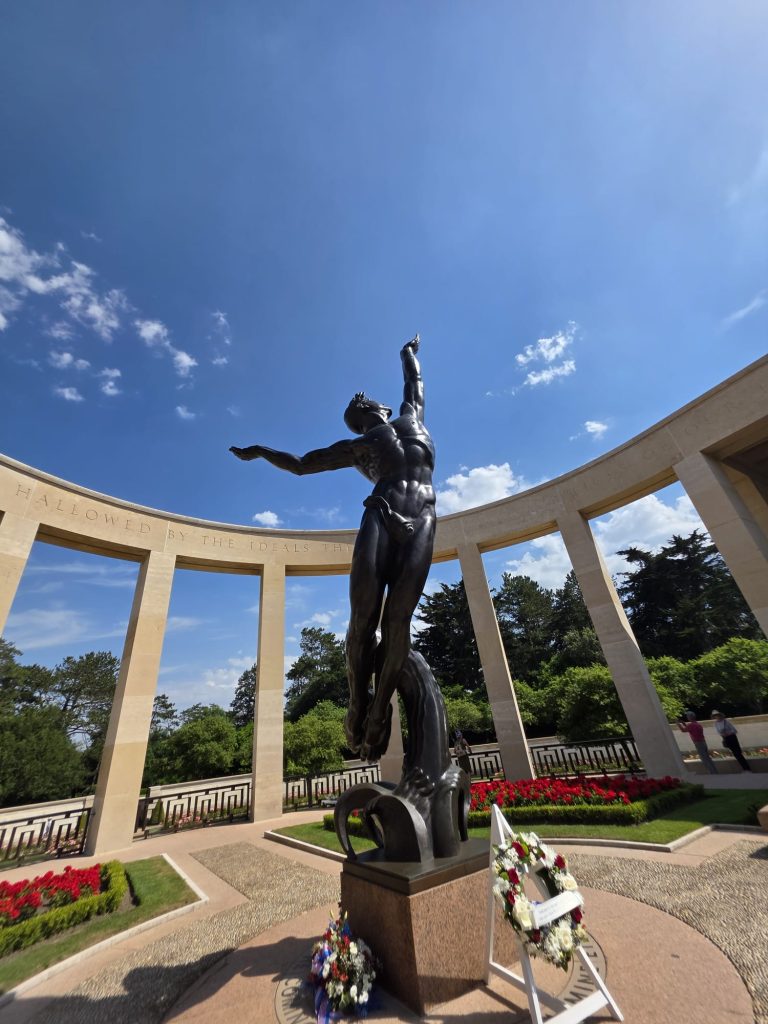
No mortal man should possess the jurisdiction to spend human lives on this scale.
No throne.
No parliament.
No ideology.
No dictator.
No political movement.
No empire.
No leader’s pride, vanity or ambition should ever demand that ordinary men surrender everything they possess—their future, their family, their children yet unborn—for decisions made hundreds of miles away.
Nor should any claim of divine authority excuse such sacrifice.
If there is a God worthy of reverence, then surely such a God values life above slaughter.
And if there is no God, then humanity bears an even greater responsibility to protect itself from descending into endless cycles of violence.
Either way, the conclusion remains the same.
Life is sacred because it is finite.
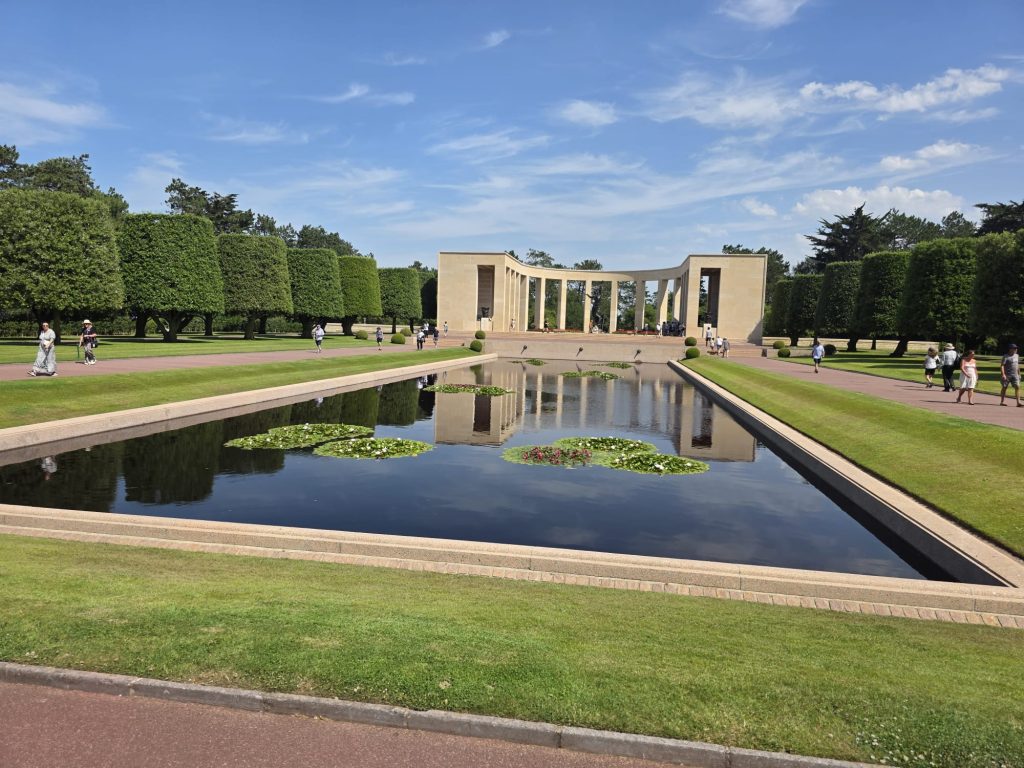
These soldiers were not mythical heroes.
They were ordinary people asked to do extraordinary things.
Many were scarcely old enough to shave.
Some had never travelled beyond their home state before crossing an ocean to fight on foreign soil.
They climbed from landing craft into machine-gun fire.
They crossed fields littered with death.
They fought because history demanded something terrible of their generation.
Whatever politics surrounded them, their courage cannot be questioned.
Their sacrifice deserves remembrance—not because war is glorious, but because peace is precious.
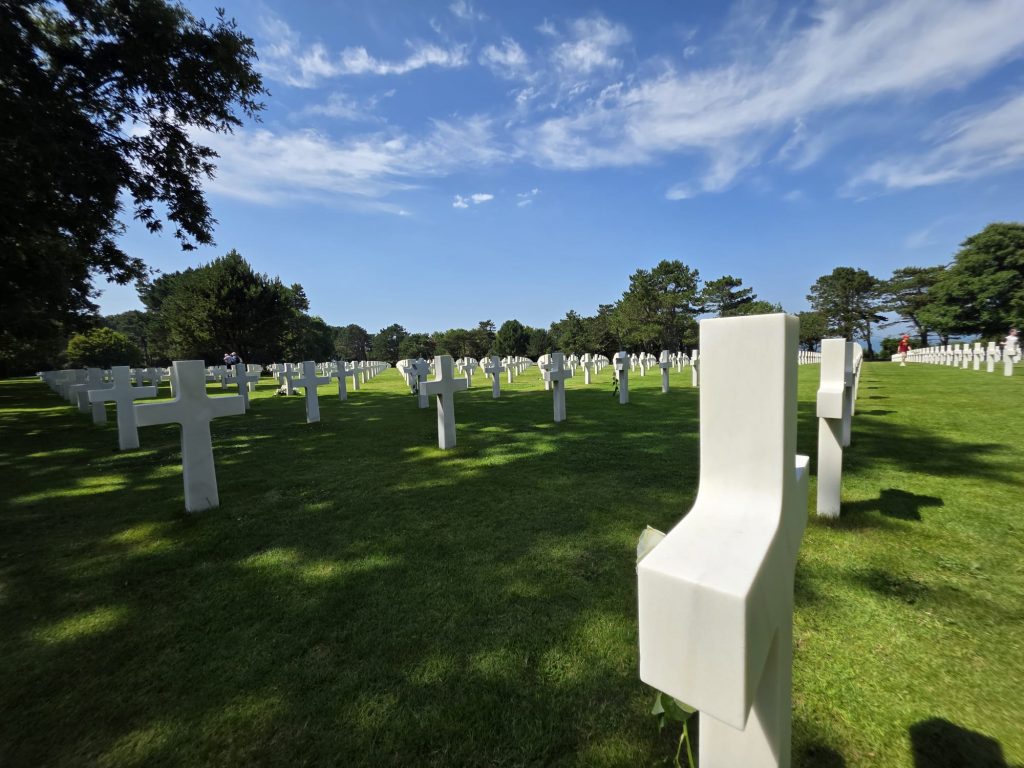
The rows of identical white crosses carry another lesson.
Death is the greatest leveller.
Rank disappears.
Wealth disappears.
Politics disappears.
Nationality becomes secondary.
Every grave carries equal dignity.
In death, humanity becomes equal once again.
Perhaps we should strive to remember that while we are still alive.
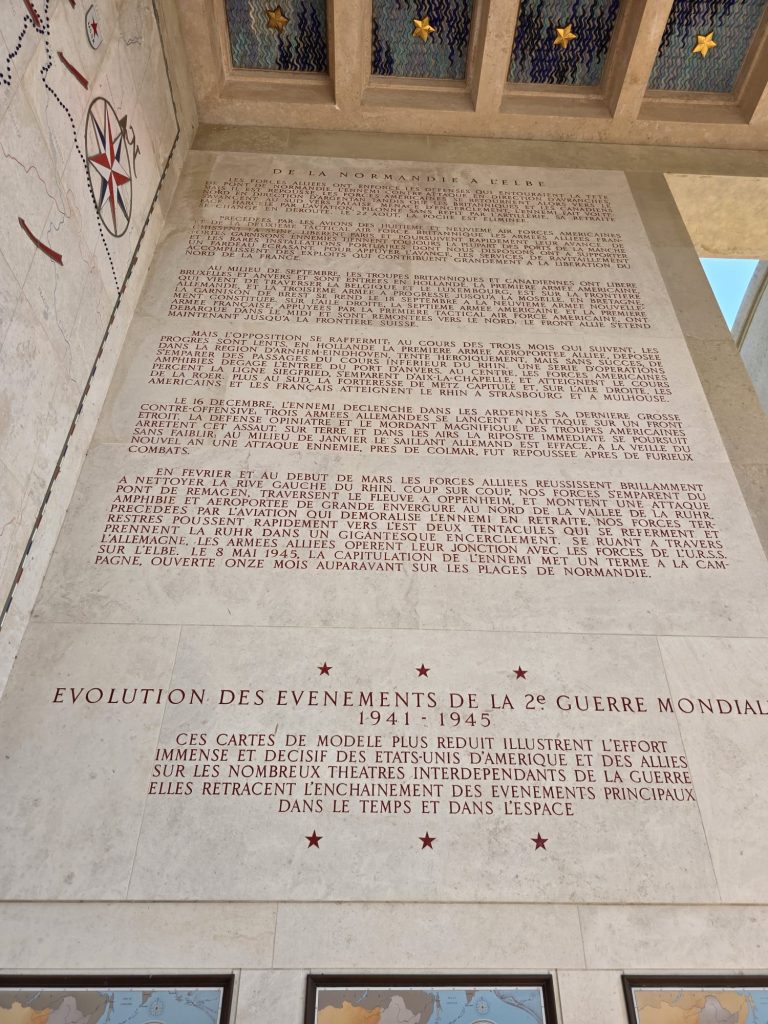
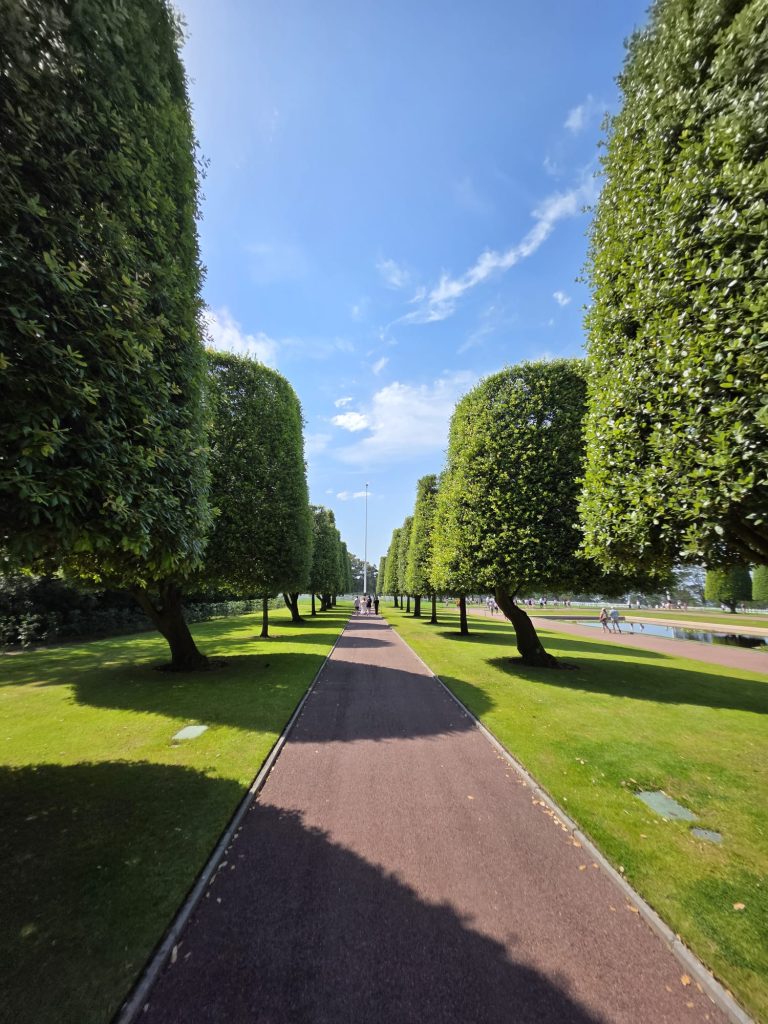
As I walked beneath the shade of the Normandy trees, looking across the immaculate lawns towards the sea from which these young Americans came, I could not help but think of what civilisation ought to become.
Surely our purpose cannot simply be to build larger armies and more destructive weapons.
Surely the measure of progress is not how efficiently we can kill.
Our true evolution must be moral as much as technological.
Humanity has learned to split the atom.
It has walked upon the Moon.
It communicates instantly across continents.
Yet too often it still settles disputes as our ancestors did—with violence.
That is not progress.
That is intelligence outrunning wisdom.
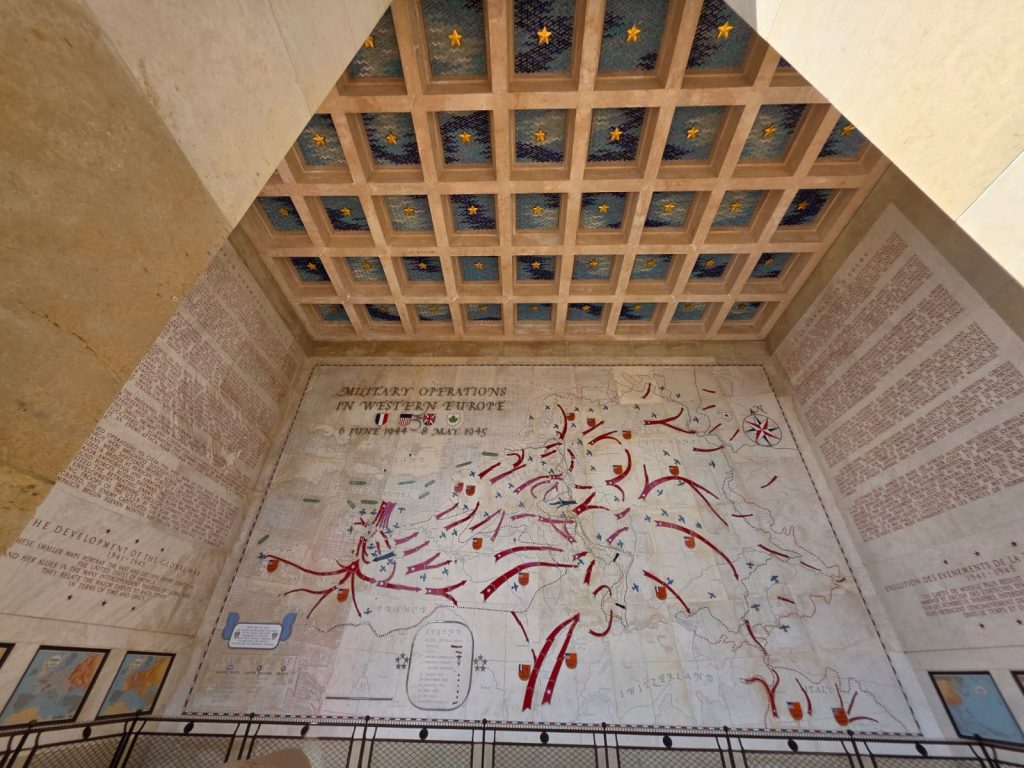
The social contract between human beings should be stronger than the ambitions of any ruler.
Governments exist to preserve life, not casually expend it.
Power should always carry restraint.
Leadership should always carry accountability.
No society should allow one person’s vanity, pride or ideology to become another family’s grief.
If these cemeteries teach us anything, it is that every political decision made in comfort is eventually paid for in places like this.
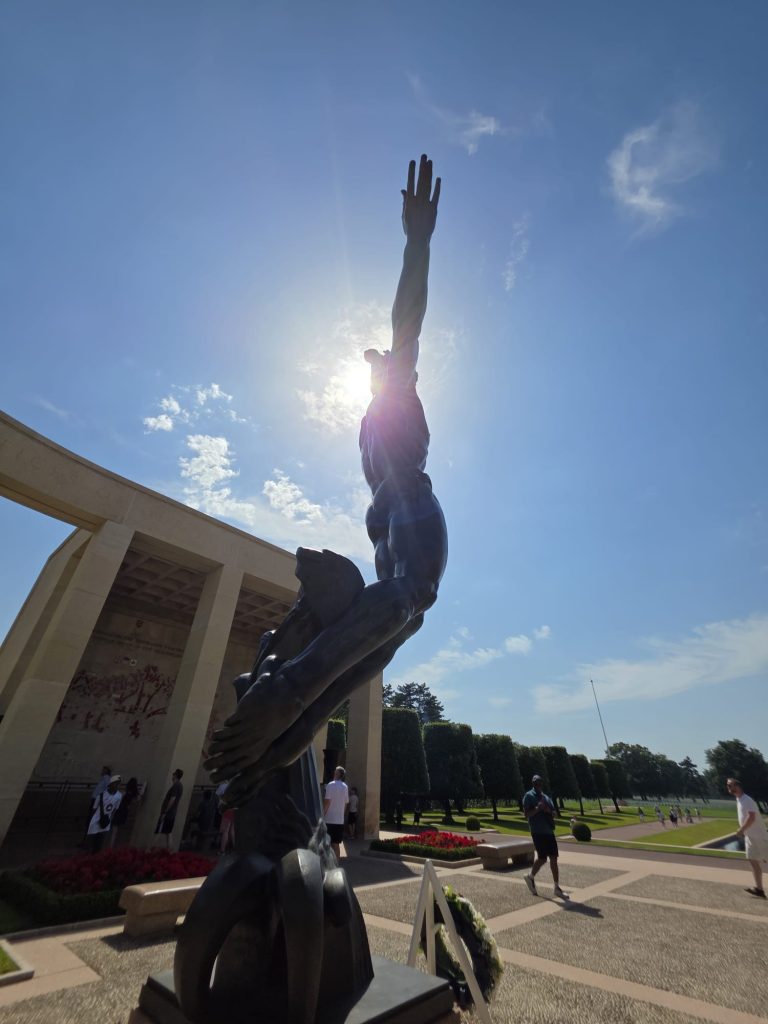
The young men buried here fulfilled their duty.
The question is whether we are fulfilling ours.
Our duty is not simply to remember them each June or November.
It is to ensure that remembrance changes us.
To build institutions that favour diplomacy over destruction.
To teach history honestly.
To value compromise above hatred.
To reject the easy language that turns neighbours into enemies.
To remember that every war begins long before the first shot is fired—with words, with pride, with fear, with the belief that some lives matter less than others.
As I left the cemetery, the silence remained.
Not an empty silence.
A full one.
A silence filled with unfinished conversations, interrupted dreams and lives that ended far too soon.
These men can no longer speak.
Their marble crosses speak for them.
They remind us that the greatest tribute we can ever pay those who died in war is not another victory.
It is building a world in which fewer young men are ever asked to make the same journey.
For that, surely, is the highest duty of every civilisation worthy of the name.