
A rich blend of history.
The Bayeux Tapestry is one of the greatest surviving works of medieval art, and several things commonly believed about it are either incomplete or incorrect
It isn’t actually a tapestry
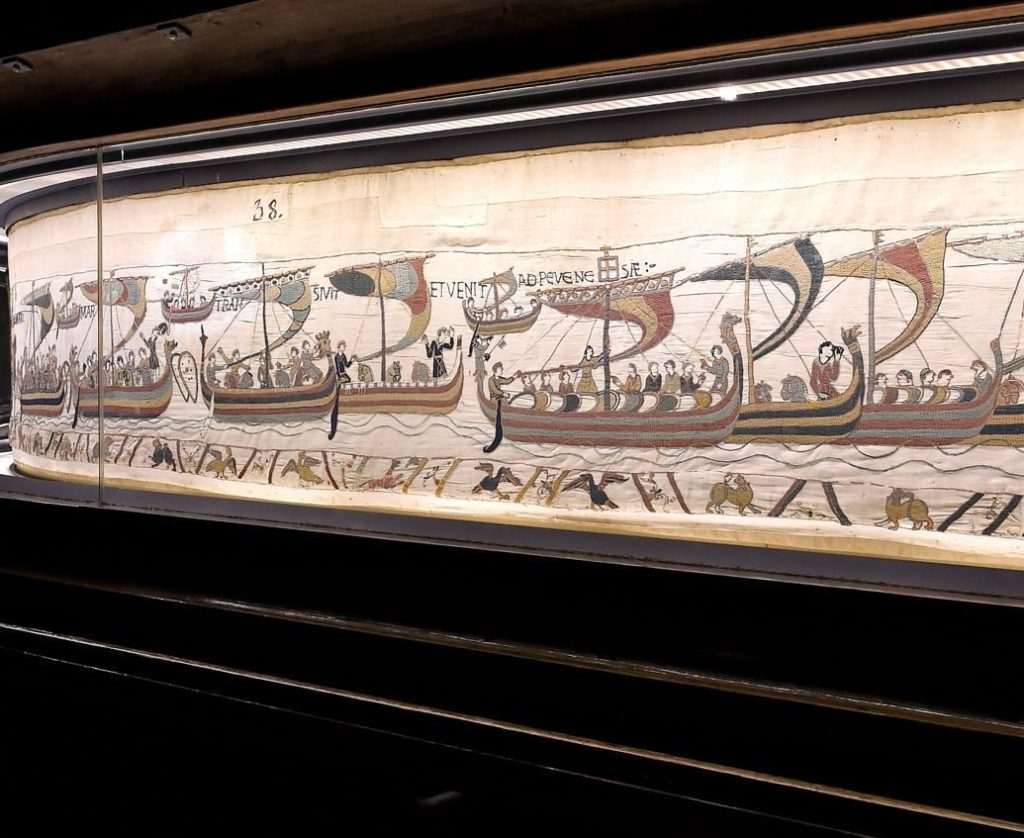
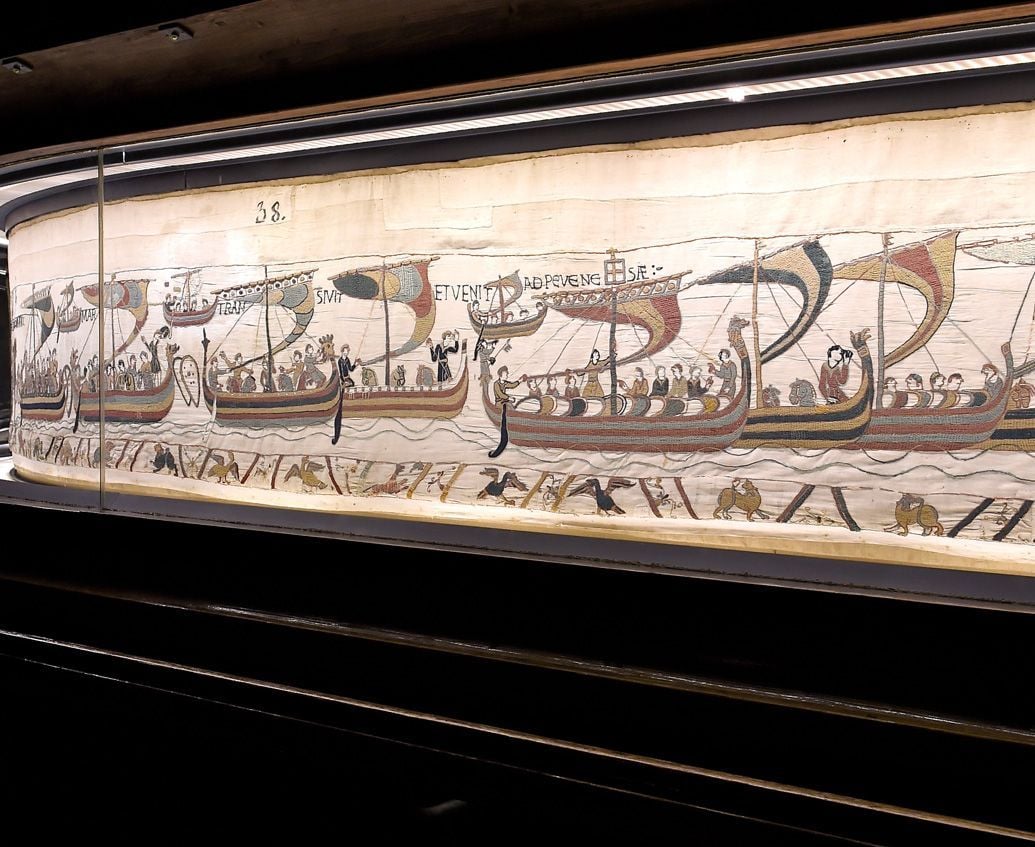
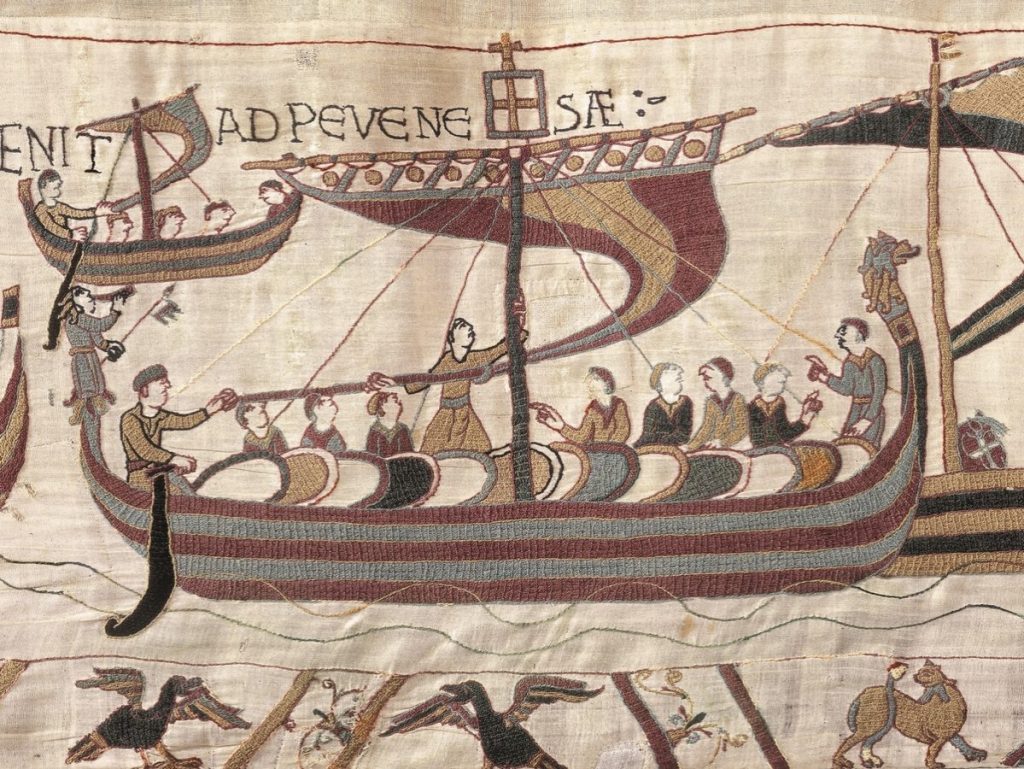
Despite its name, the Bayeux Tapestry is not a tapestry in the technical sense.
A true tapestry is made by weaving the design into the fabric on a loom. The Bayeux work is instead:
- A long strip of linen cloth about 70 metres (230 feet) long.
- Decorated using wool yarn embroidered onto the linen.
- Created mainly with stem stitch and laid-and-couched work (sometimes called Bayeux stitch).
So it is really an embroidered hanging, not a woven tapestry.
Was it made in England?
Most historians now think yes.
Although it has been in Normandy for centuries, the strongest evidence suggests it was produced in England, probably around 1070–1077, only a few years after the Norman Conquest.
The leading candidate is the monastery of St Augustine’s Abbey in Canterbury, although other English religious houses have also been suggested.
The evidence includes:
- The style closely matches Anglo-Saxon manuscript art.
- The Latin inscriptions contain spellings associated with England.
- The embroidery techniques were highly developed in Anglo-Saxon England, whose needlework was famous throughout Europe as Opus Anglicanum (“English Work”).
Was it made by nuns?
This is one of the most famous traditions—but it is not proven.
For many years people believed it was sewn by Queen Matilda and her ladies-in-waiting, but historians now reject that story.
The more likely possibilities are:
- Professional embroiderers attached to an English monastery.
- Skilled female artisans working in a religious workshop.
- Nuns may have been involved, particularly if it was made at a convent, but there is no surviving evidence naming the makers.
So “made by nuns” is possible, but it remains an informed hypothesis rather than an established fact.
Who commissioned it?
The leading candidate is Odo of Bayeux, the half-brother of Eilliam the Conquer2² .
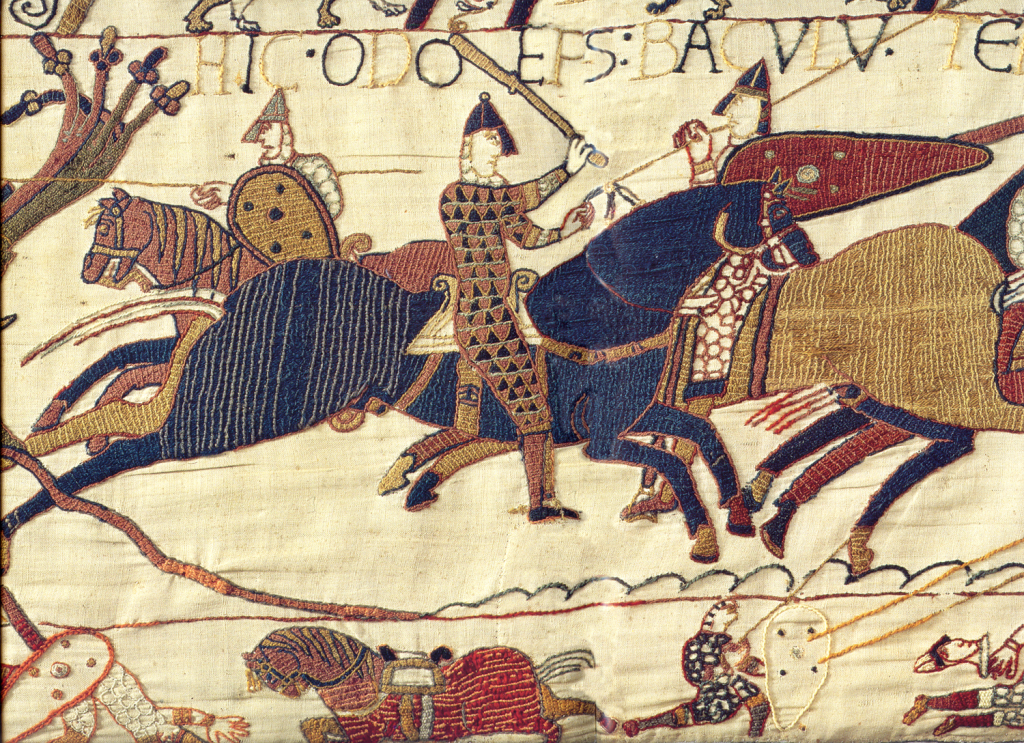
Several people shown prominently in the embroidery were connected with Odo, suggesting he commissioned it to celebrate William’s victory at the Battle of Hastings.
It’s also propaganda
Although incredibly valuable as a historical source, it isn’t neutral.
It portrays:
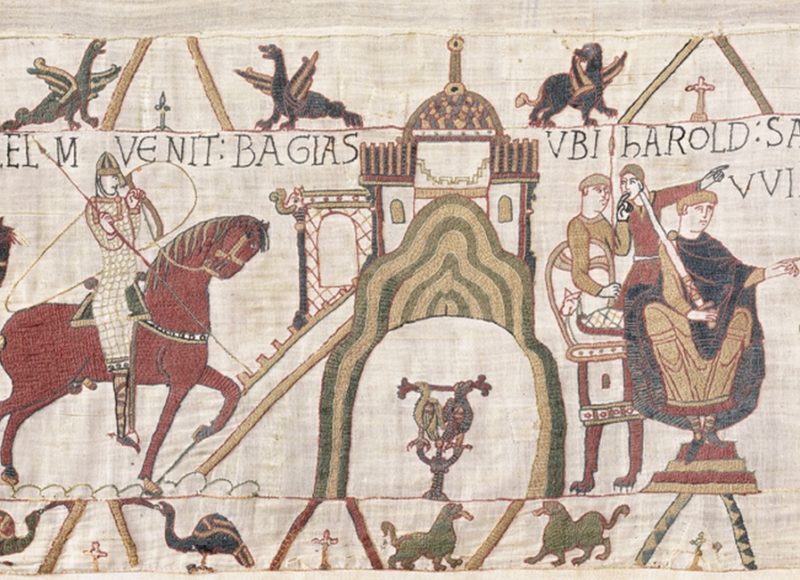
- Harold Godwinson swearing an oath to William.
- Harold’s coronation after Edward the Confessor’s death.
- The Norman invasion.
- The Battle of Hastings.
The embroidery generally supports the Norman claim that Harold broke his oath, thereby justifying William’s invasion. Yet it also depicts Harold with considerable dignity and courage, making it more nuanced than simple propaganda.
Fascinating details
- It contains 626 human figures, over 200 horses, numerous dogs, birds, mythical creatures and ships.
- Halley’s Comet appears and is one of the earliest known depictions of it.
- It originally ended with William’s coronation, but that final section has probably been lost.
- Remarkably, it survived almost 1,000 years despite wars, revolutions and even being used briefly to cover military wagons during the French Revolution.
For anyone interested in the Norman Conquest, the Bayeux Tapestry is less a work of decorative art than a medieval documentary—stitched by English hands, probably for a Norman patron, telling one of the most pivotal events in English history.